
How to start a cut flower garden – expert tips and ideas and the story of making my own flower patch.
This is my happy place. Dahlias that grow like there’s no tomorrow and a hidden shed for all seasons. My flower patch started out as a way of growing plants in rows with the express purpose of picking them. It’s always felt somewhat brutal to cut flowers from the garden when they’re happily blooming away, knowing that in doing so I am actively hastening their end… so I figured that growing them in rows like in a vegetable patch would ease this sense of vandalism. It has helped a little but, if I’m honest, I still prefer to see the blooms, when they appear, waving in the breeze as they tempt insects and butterflies near.
A gardener friend of mine (actually Gardener’s Question TIme panellist Pippa Greenwood – so she would know) recently reminded me that the more you pick flowers, the more you’ll get. So, being more cavalier with the snippers is going to be my challenge for next year.
As Autumn approaches, it’s the perfect time to start dreaming about – and planning for – a flower garden for next Summer. There’s so much joy to be had from browsing seed catalogues and making the best kind of shopping list. With that in mind, I wanted to share the story of my own fledgling new flower garden with you – along with some of the expert tips I’ve gathered along the way… There’s a garden hose ban where I live right now, so the current rainy days are saving me so much work and giving the different plants a welcome soaking. I’ll share ideas for soil type, some flower garden design ideas, perennial plants to factor in and how to create a focal point.
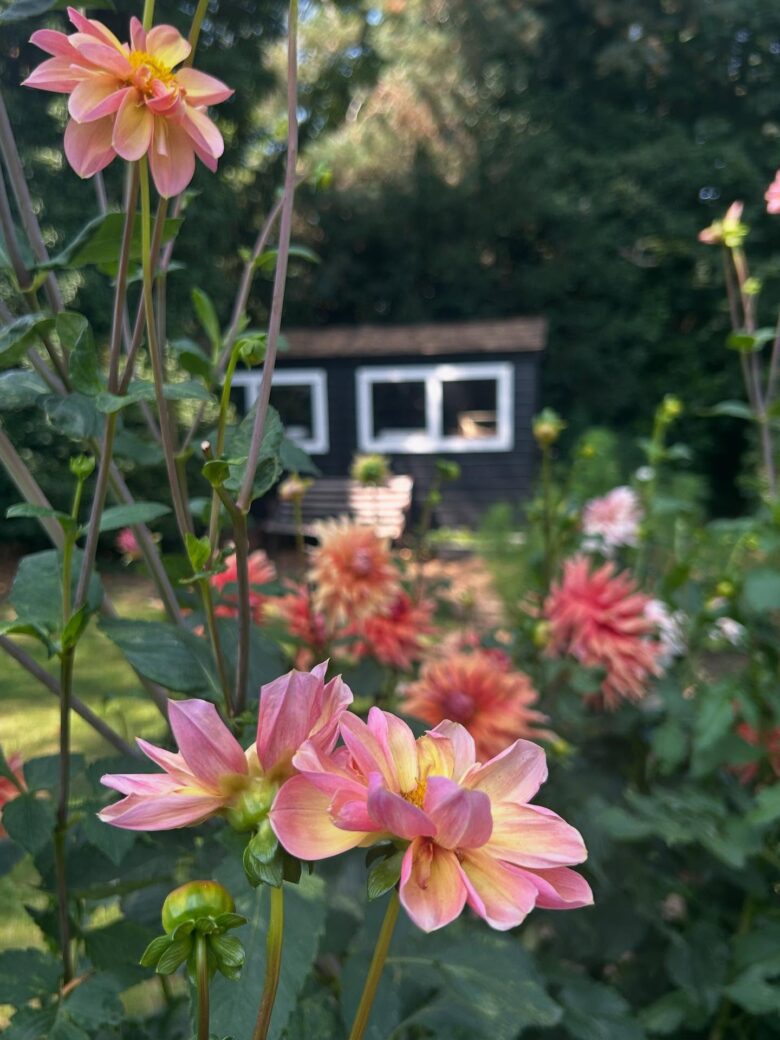

A lot of my own inspiration comes from mooching around beautiful flower gardens. I have Gilbert White’s garden just down the road in Selborne, so I try to make it over each season. It’s an unassuming garden run by volunteers but I always find something to spark ideas there. Other gardens where I’ve picked up precious flower garden ideas are Mottisfont Abbey (the roses are spectacular in early summer), the tulip festival in the spring at Arundel Castle (a limited number of tickets) and the flower borders at Wisley – it’s the public garden of the RHS and a great source of ideas. Wisley is very creative throughout the seasons too – in Winter they have fireworks and fountains, with flickering lights taking you through the gardens.
Where it all started
It was a blissful April day spent with Tammy Hall at her Wild Bunch Flowers farm in Shropshire (below) that set me off. Walking her poly tunnel full of salmon pink and vibrant coral ranunculus… rows and rows of exquisite peony-like double tulips and other spring blooms in the softest creamy coffee and lime-edged pastel pinks… enjoying apple trees grown just for their blossom… spring lambs hopping over to say hello…
(You discover the inspirational story behind Tammy’s business (more flower farm than flower garden) over on the blog post Meet Tammy Hall of Wild Bunch Flowers here)
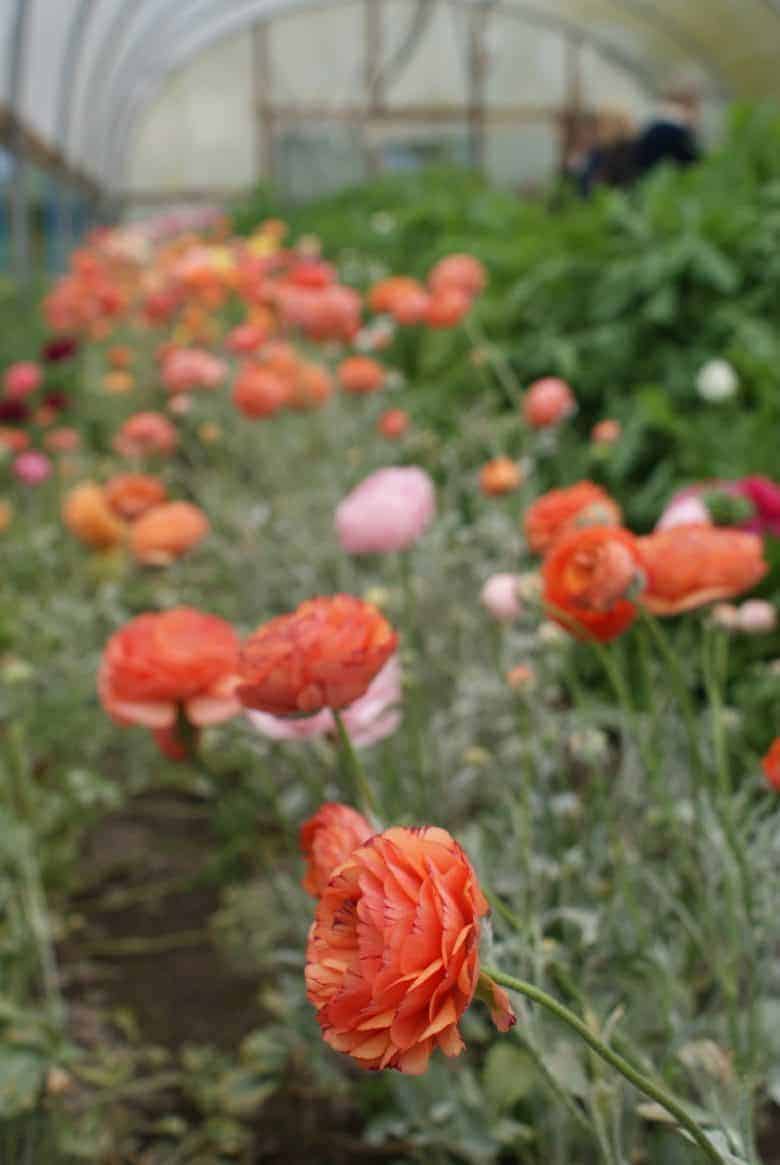
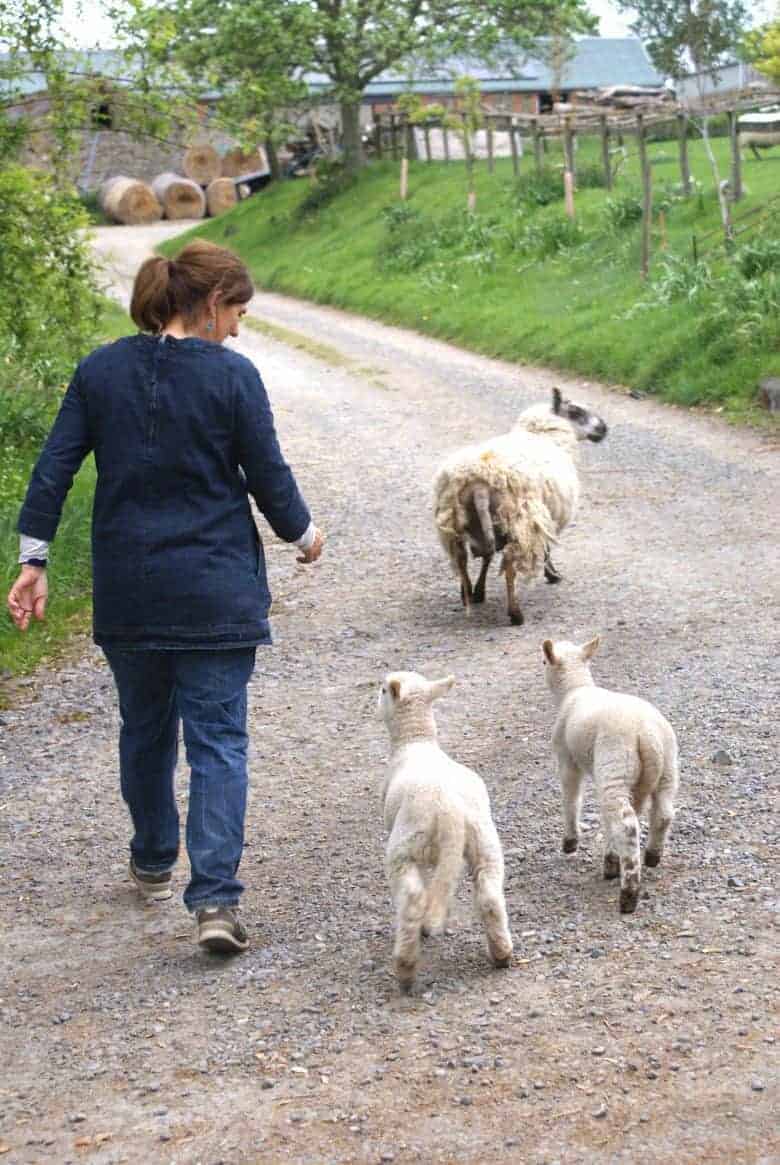
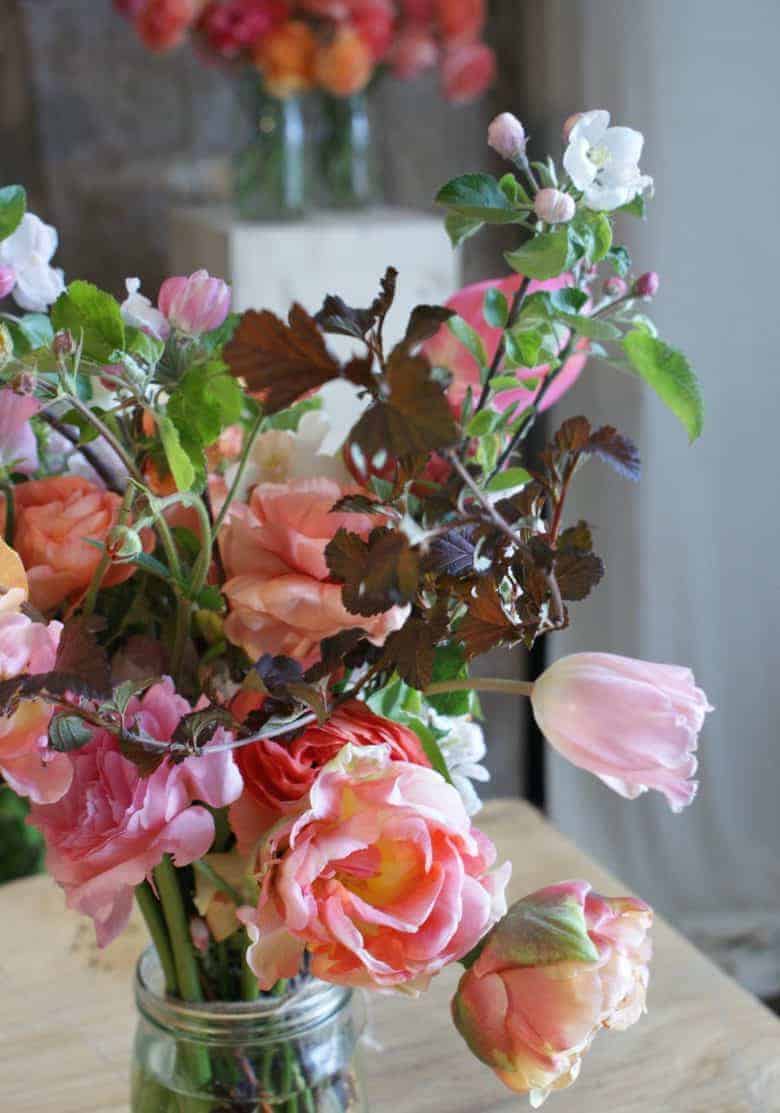
I came away feeling really inspired to grow more myself. I have always loved spending time pottering in my garden but, as I’ve mentioned, always struggle to take the snippers to flowers when they look so beautiful in the flower bed. But I do love to fill the house with simple jugs and jars of seasonal blooms and foliage. It got me thinking about doing more with a forgotten and overgrown area of my garden. I made up my mind to create a dedicated sustainable flower cutting garden.
Reclaiming from the weeds
A couple of weekends later I’d reclaimed two weed-choked abandoned old vegetable patches still surrounded by flagstone paths (that were hidden beneath the overgrown grass) and one of them in full sun. The other bed has partial sun because of nearby tall tree. I wasn’t confident I’d ever be able to stand up straight again after a weekend of weeding, digging and sieving the soil through a vintage riddler. I added lots of homemade compost and organic matter to improve the soil quality and treated myself to a garden shed. It wasn’t anything fancy but I went for a decent size and painted it smart black with white windows and a wooden roof.
My first garden shed and now my retreat. I was on a roll and even decoratively edged the beds with curved green twigs taken from a forsythia I’d just heavily pruned. It was an idea I’d seen edging the kitchen garden at Hinton Ampner National Trust property a year or two ago and it was just the best fun to do. I loved how it all looked when it was finished and kept popping back up there just to look, cup of tea in hand. I actually had the blank canvas of a cutting garden of my own! All I needed now were flowers to grow in it.
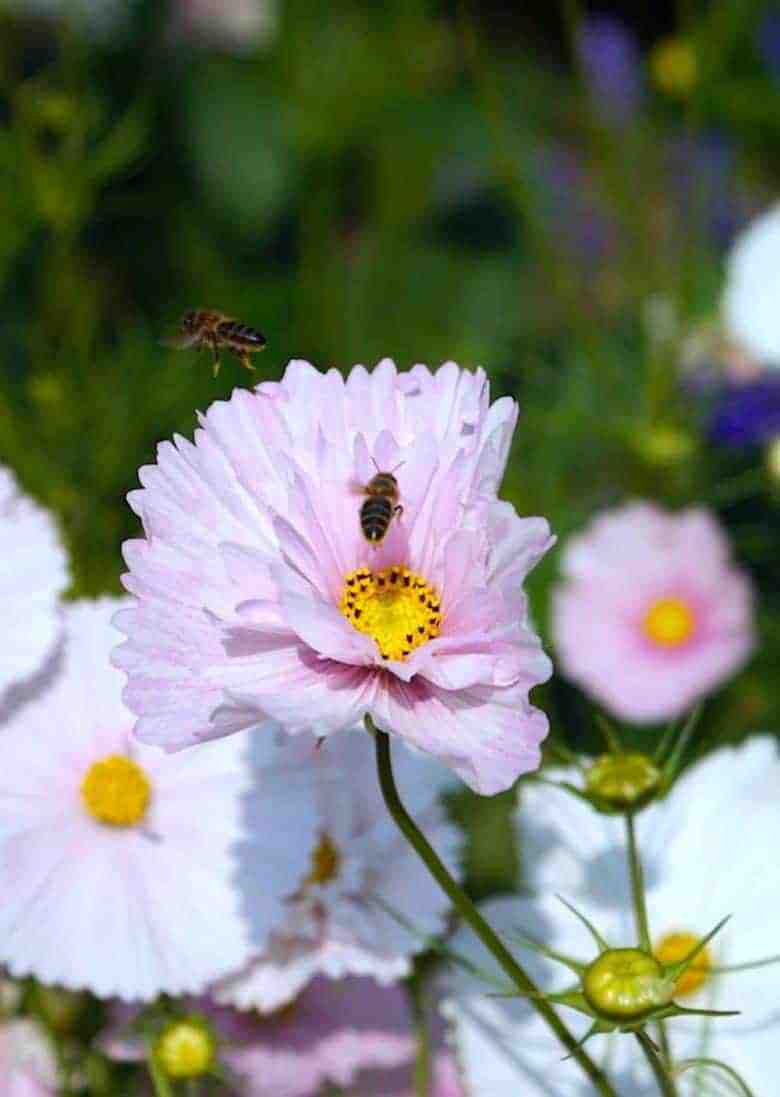
I’d sown trays and trays of seeds that were soon ready to plant out. If I’m totally honest, I did run at this a bit, as I’d started late and was trying to catch up. I just bought packets of seeds (from Sarah Raven and my local garden centre) that I liked the look of, without giving it much (any) thought. To make life easier for myself, I decided to make perennial beds too – that wouldn’t need to be started from scratch each year.
Here’s what I bought:
My favourite flowers: Cosmos Purity, Cosmos Cupcake Blush, Larkspur, Foxgloves, Falling in Love Poppies, Twilight sweet peas, and Cup and Saucer mixed Canterbury Bells. I wanted lupins, or purple lupine flowers at least, but I decided there was plenty of time to add in more plants from the garden centre later if I needed to. I know that garden designers will use color a wheel when deciding what shades to combine and contrast. I didn’t really approach my first planting scheme like this, though. I just picked what I like, and decided as it was a cutting garden, rather than an ornamental flower bed, I could embrace the colourful jumble of it all.
Things I did pay attention to: soil type, exposure to sun and wind. I live in Hampshire, with an old walled garden, so there is plenty of sunshine, the wall gives shelter and the soil varies from sandy in areas to rich and loamy. It’s worth checking the regional guide to what will grow where you live too. The USDA plant hardiness zone map is invaluable for this.
I also ordered 9 Cafe au Lait dahlia bulbs (from Rose Cottage Plants) and bought three delphinium seedlings from my fantastic local independent garden centre (Aylings in Rogate). I’d taken cuttings from a large rose geranium plant the autumn before (bought from the farm shop at The Real Flower Company farm near Alresford – a really good place to buy plants if you’re in the area. It’s open every Friday morning throughout the growing season), so I now had 10+ plants to play with. I kept some in pots for a vintage metal plant stand in my garden and decided to plant a row of in my new cutting garden too. I love the fragrant leaves with their frilly edges and they work brilliantly in flower arrangements.
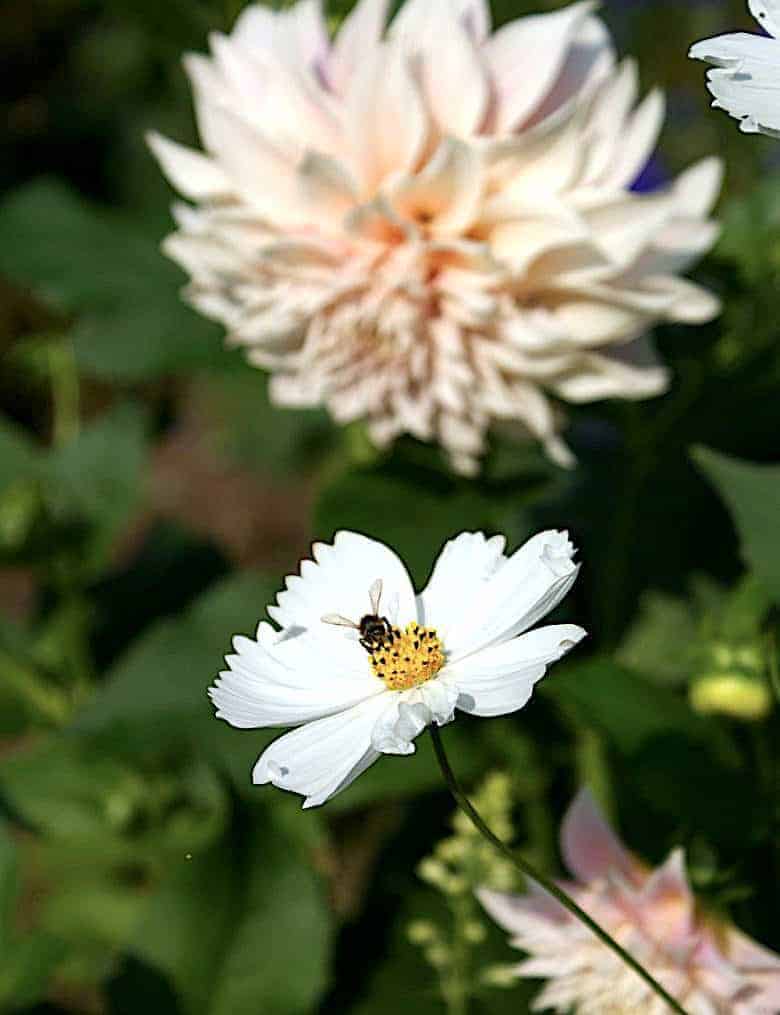
Soon I had rows of my own seedlings planted out in each new flower bed, arranged in very neat straight lines. I used the simple ‘ball of string and two sticks’ technique I learned from helping my dad as a little girl, when we’d plant out cabbages or dig trenches for seed potatoes. I also poked sturdy canes in next to where my dahlias were starting to grow ready to offer them support. And so the simple joy of daily evening watering began. The utter thrill of watching it all start to happen just as I’d dreamed!
Sustainability
I am determined to grow sustainably and without the use of any nasty chemicals. It’s more than a little handy that expert gardener Pippa Greenwood is a good friend. She popped in for coffee and cake – and I picked her brains about how to deal with garden pests responsibly. Pippa gave me masses of confidence that it would be more than possible to grow abundant healthy flowers in a sustainable way. The key, she told me, is to identify any pests quickly and deal with them. There’s a whole blog post: Sustainable garden ideas from Pippa Greenwood if you want to know more.
I haven’t used a single slug pellet or chemical since I started. I did buy live ladybirds which were a revelation and a really good idea for anyone struggling with green, black or white fly… They set to work on aphids and black fly from day one and I loved to spot their dotty red backs as they conscientiously got on with the task in hand. There was a distinct sheepy smell for a few weeks after putting down anti slug wool pellets – which worked brilliantly and saved my delicate Cosmos and Larkspur seedlings. Once the plants had grown a little hardier, I didn’t need to worry about the slugs or snails any more. After that it was all about making sure to water enough and to keep the weeds in check.
I love to watch the busy eco system at work – so many butterflies, bees, ladybirds and naturally healthy plants. Is there anything better?
Poppies…
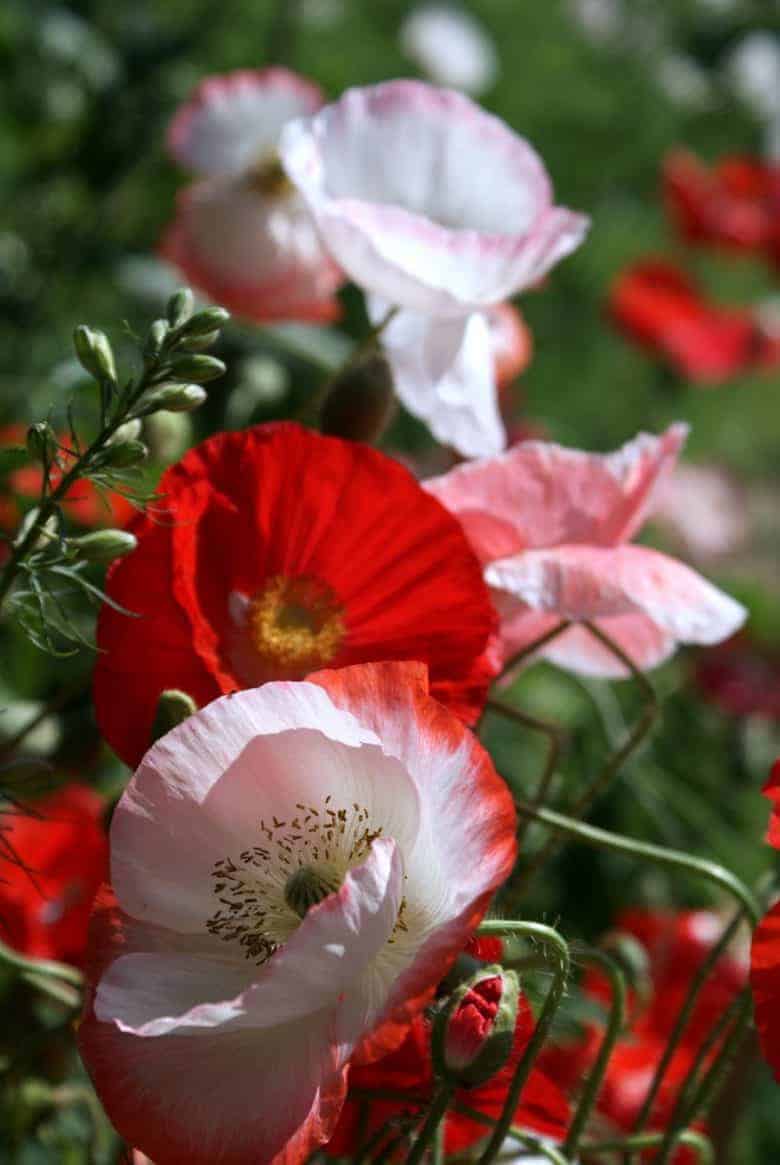
First to burst into a blaze of colour were the poppies. I just love this ‘Falling in Love’ mix from Sarah Raven – salmon pinks, bright corals and whites with subtle blush edges. I’d take a cup of tea up there in the early morning and enjoy watching the bees and insects busily flying in and out of them. I didn’t find the poppies lasted well as cut flowers, however. Who knew that searing the cut end would make all the difference? Well, I do now! (See Sarah Diligent’s expert tips below for more info on how I hope to put this right next year!).
Cosmos
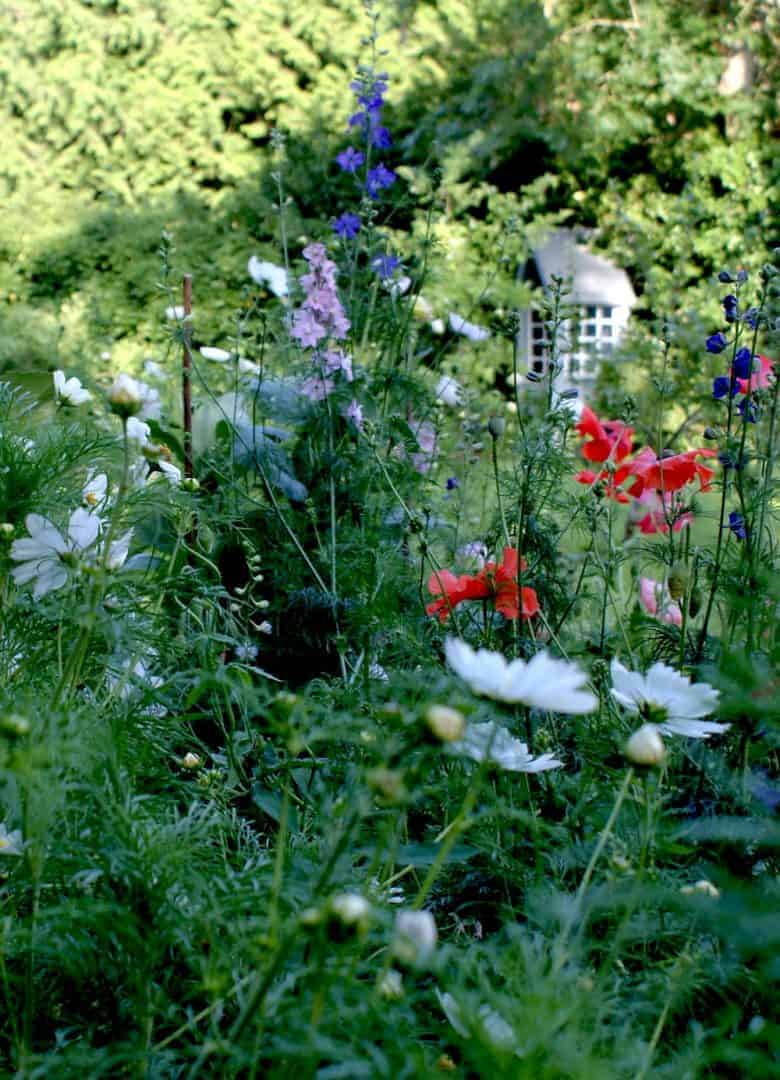
Soon the cosmos plants had grown tall and full of pretty flowers. Cosmos Purity is the perfect white cottage garden flower. It keeps going and going and the flowers last well when cut. I think my favourite, though, were the Cupcake Blush variety. The bees certainly thought so and I just loved their pretty shape and subtle pale colours. I cannot believe just how much these beautiful plants have given – and still continue to give!
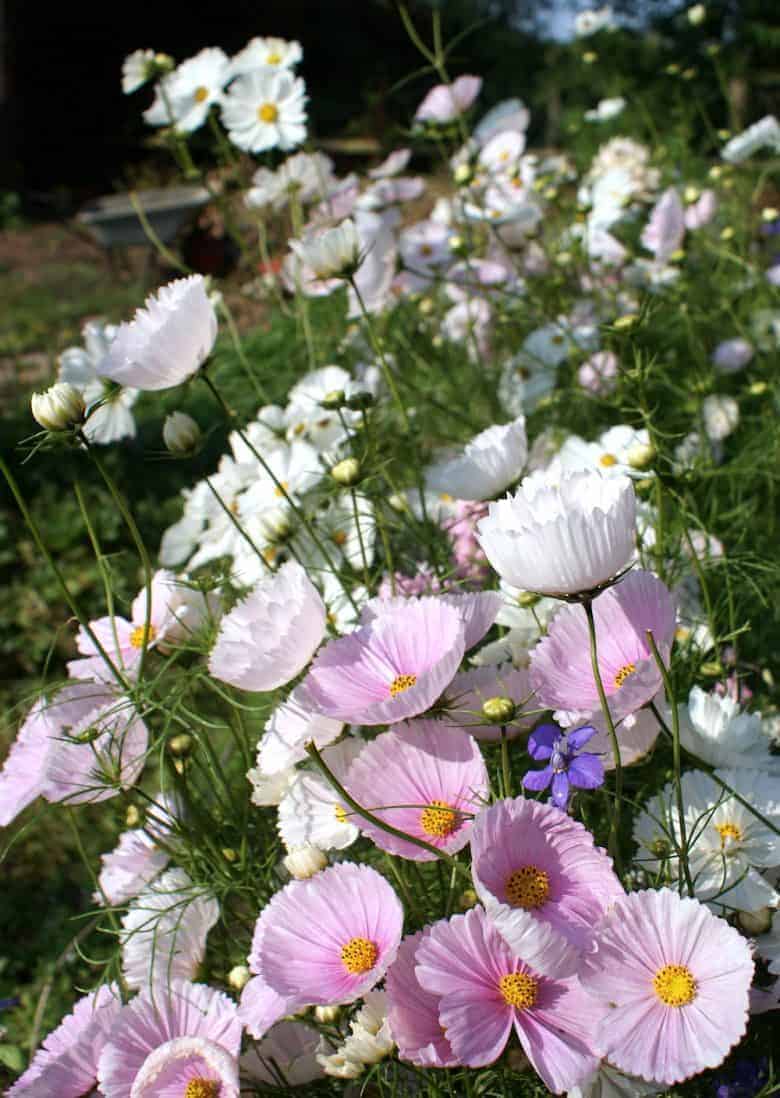
As we speak they are both still flowering like crazy and I am keeping on with the dead-heading as I can’t quite bear to actually say goodbye. Even though the lower leaves and stalks of plants themselves looks somewhat blackened and tired. But whilst they keep flowering valiantly in the face of the inevitable, I’m not about to give up on them.
Here’s a little video I took one summer morning that fills me with longing for next year…
The larkspur was pretty too and I cut masses as the weeks went on. It was really great for adding splashes of colour – purple, lilac and pink. I did try keeping on top of removing all the seed heads as soon as they appeared to prolong the flowering.
Sweet peas
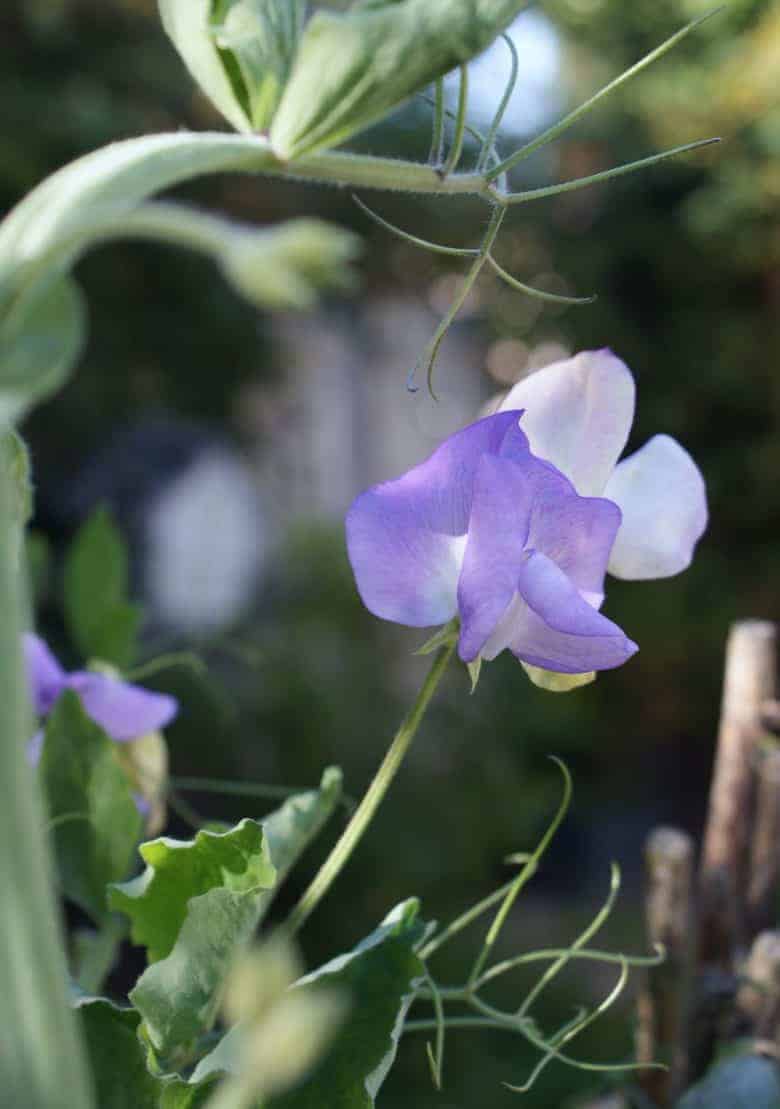
The sweet peas were abundant, fragrant and beautiful but I chose to grow these up a homemade willow cane wigwam in a large metal pot I reclaimed from the local recycling facility. I am still picking a small bunch of sweet peas each week, thinking each one will be the last.
Queen of dahlias
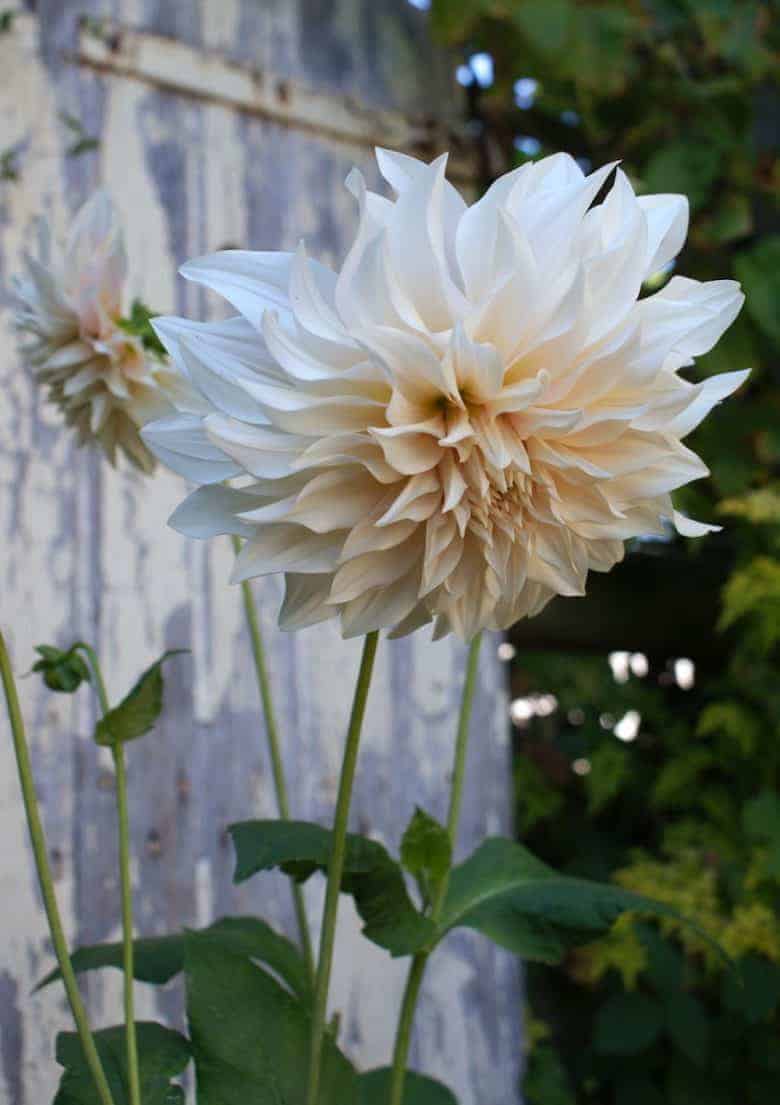
But… of all the flowers I have grown this year, the café au lait dahlias have been my hands-down favourites. They are still giving me 10 or so dinner plate-sized flowers a week. I must have had over 100 flowers so far and all just from 9 bulbs. They are big, blowsy and utterly beautiful.
The foxgloves are now large and very healthy looking plants. But not a flower to be had all summer long. I’d planted them out in large numbers before I realised they wouldn’t be flowering until the following summer. I’m sure they will flower next year in abundance… It’s exactly the same story with the Canterbury Bells. I do feel a bit cross with myself that I didn’t take the time to properly read up on it all. It’s not really like me to be so slapdash, and I am determined to do much better next year. I wouldn’t have given them so much space where they are if I’d realised in time. I’m selling myself the idea that there’ll be flowering foxgloves aplenty next year, which is a joy to look forward to.
Learning curve
There are so many things I got wrong this year… planting rows too close together, not taking into account the different heights plants would grow to planting taller plants where they’d take sun away from other flowering plants. I also want to consider growing foliage and flowers with interesting textures next to add another dimension to pretty and/or colourful blooms.
Key mistakes to learn from going forwards:
- Not giving plants sturdy enough stakes to cling to when the wind really whipped up.
- Not taking enough time to consider bloom times in order to maintain visual interest and a succession of flowers throughout the growing season.
- Succumbing to random plants in the supermarket that were going cheap.
- Planting too densely because I didn’t want to waste any seedlings if I didn’t have to.
Going forwards, I’m drawn to the idea of adding in some swaying ornamental grasses – as they might be nice to dry and add to other dried flowers and provide contrast with more colorful blooms. I’m no garden designer but my new flower patch is a long way from the weed-choked neglected area of ground it was, so I’m taking the positives and learning from the negatives. I also want to factor in more pollinators: bee balm and butterfly weed are both definitely on my list.
Thinking about next year
All of that said, it would be impossible to over-exaggerate the amount of sheer joy this flower garden has given me. It’s been hard work but more than worth it. If you’re drawn to the idea of flower growing but worried you might be too novice a gardener, I’d encourage to just give it a go. Start simple, get the basics right (maybe learn a little from the mistakes I made!) and see where it takes you. First thing to do is create healthy soil. Once you’ve got that in hand, I’d choose some perennial flowers to plant so you don’t have to start from scratch every year.
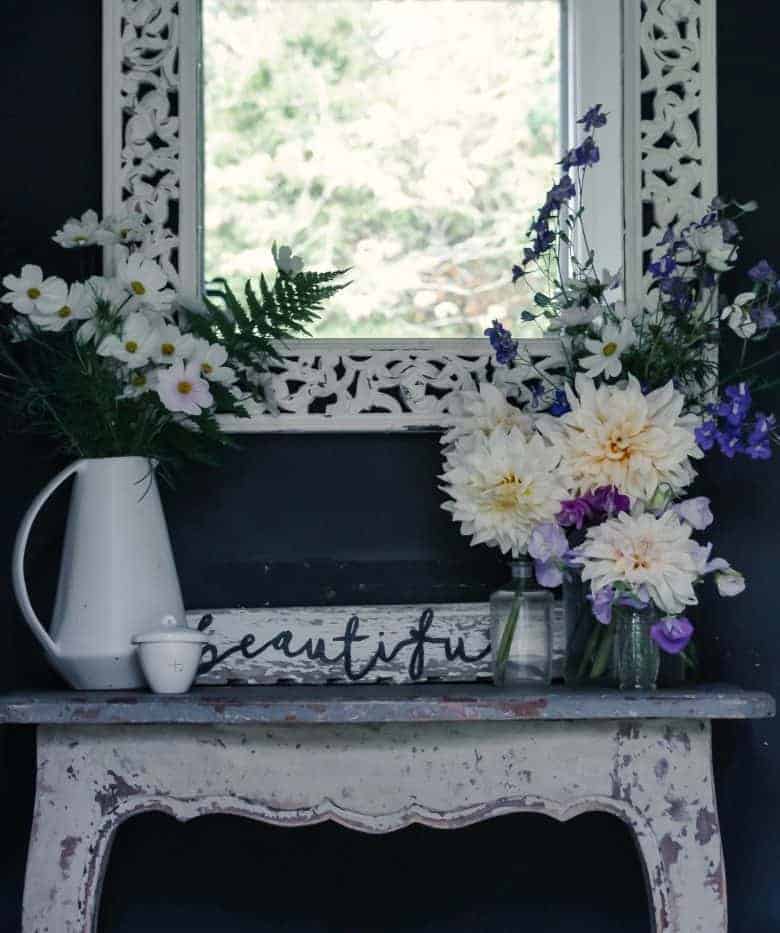
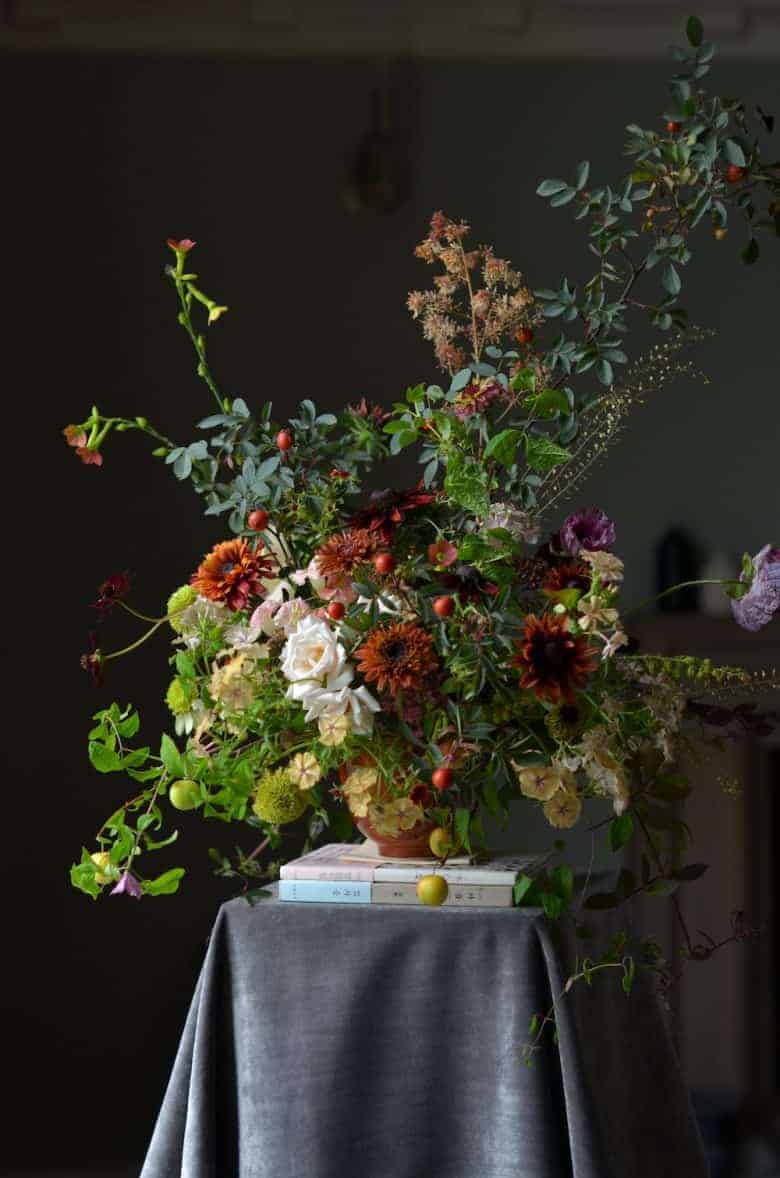
I am finding it hard to say goodbye to this summer’s flowers because some of them are still valiantly giving of their best. I picked these for my hall table just this morning.
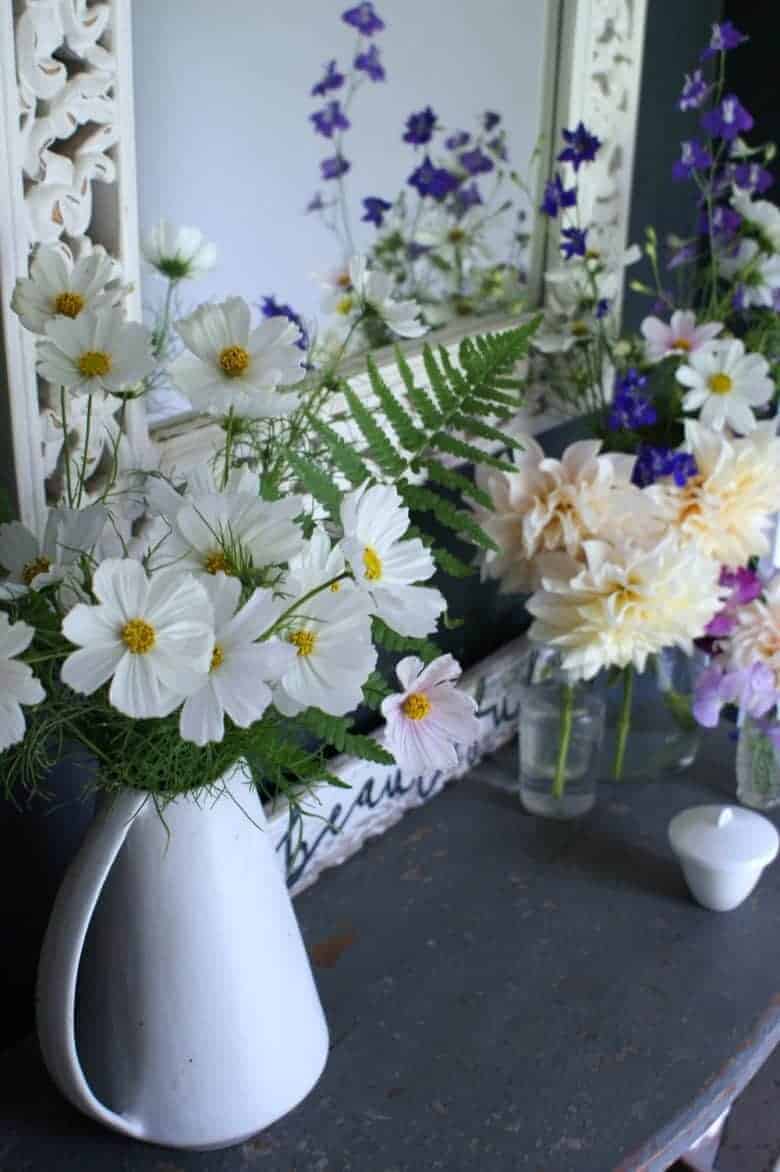
When Autumn comes
Once Autumn is fully here, and the remaining blooms are hit by the first hard frost, I know I’ll need to get properly stuck in to planning for next year. I didn’t plant enough options to keep me going through Autumn and Winter. I do already have this wonderful bee-friendly and fragrant Abelia bush in my garden which flowers right through to December.
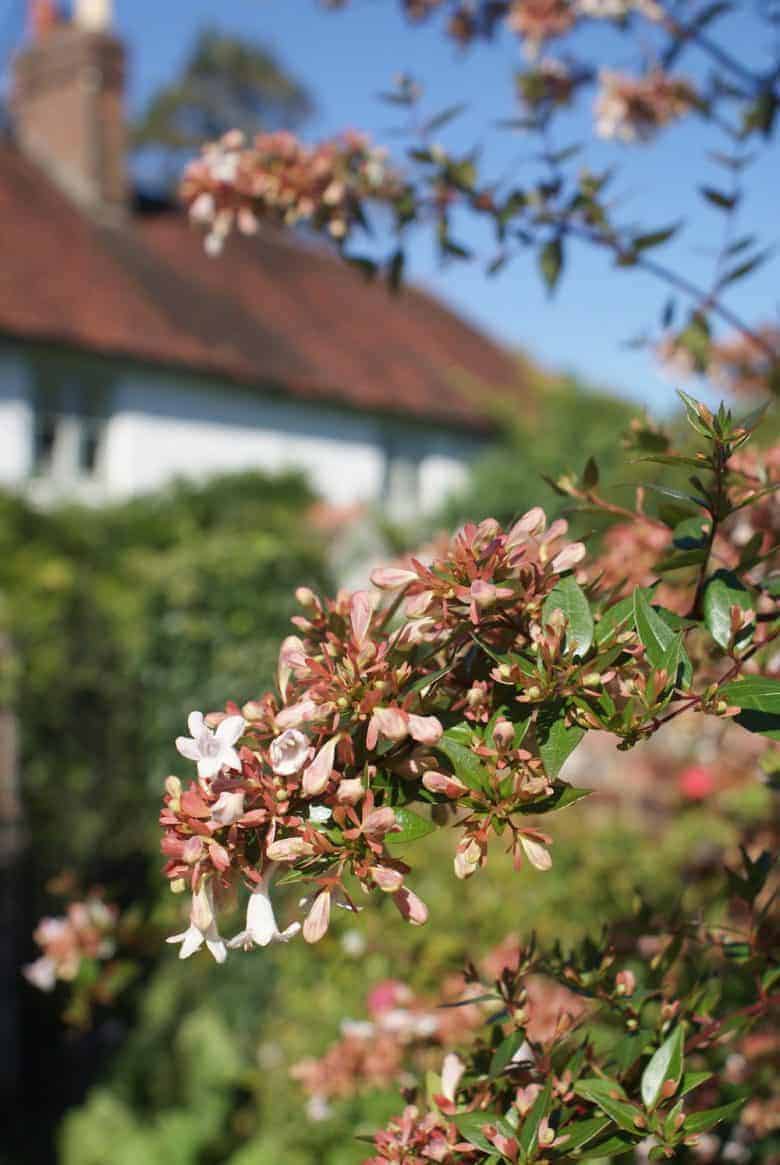
And there’s lots of ivy with berries, autumn foliage, hips and evergreen loveliness around the garden as a whole. But I have ambitious plans for next year in my flower patch. On the list already are zinnias, ranunculus, more roses, more dahlias, echinacea, lots of tulips and verbena (to attract cabbage white and monarch butterflies and bees). I have taken cuttings of salvia and potted up lots of self-seeded lady’s mantle creeping its way beyond the flower beds. To really build on this year, I could do with some expert ideas and tips, so I decided to ask for help from one or two inspirational women growers I happen to know…
It’s given me plenty of food for thought – not to mention a lengthy shopping and to-do list! Hope you find inspiration too!
How to start a cutting garden – expert ideas and tips
Expert tips and ideas from growers listed in the Sustainable British Flowers category of the From Britain with Love directory.
Rachel Siegfried, Green & Gorgeous
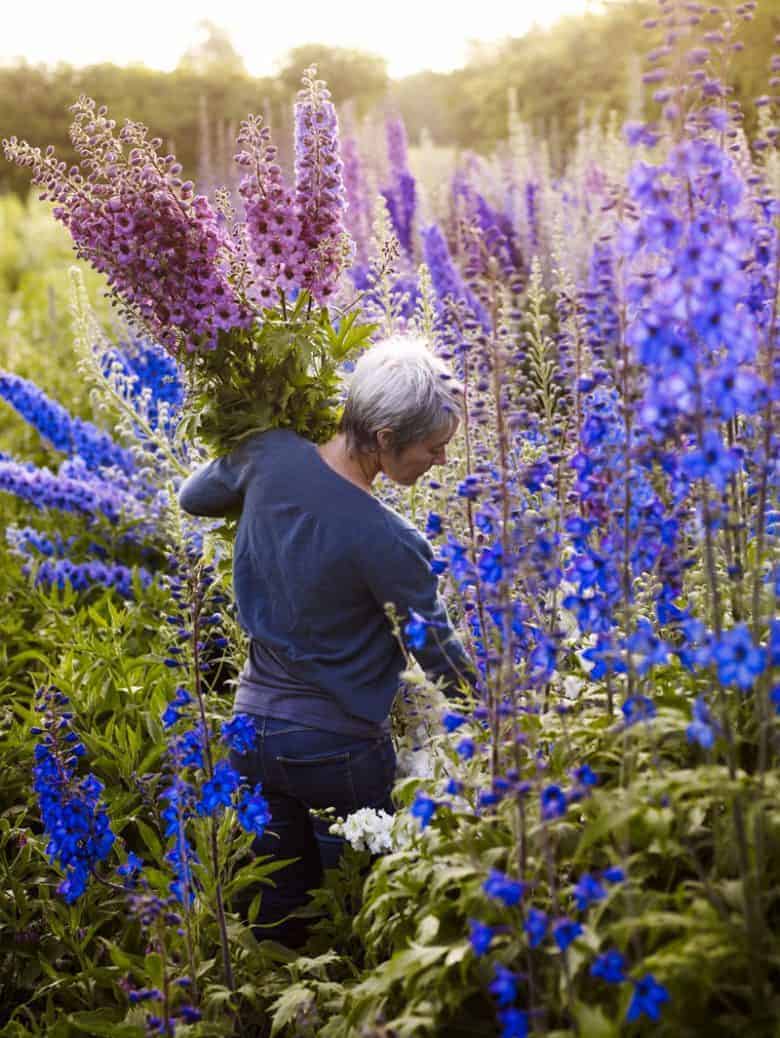
So many of my favourite growers and floral creatives credit Rachel Siegfried of Green & Gorgeous flowers as being their inspiration. Her courses and workshops are among the very best available. There’s also a great blog post where Rachel writes about Flower Farming through the seasons and shares lots of valuable information
I asked Rachel to share a few seasonal tips and ideas as well as jobs to get stuck into right now…
‘The first thing I would consider when establishing a cutting garden is planting a few shrubs for both foliage plus flowering and fruiting stems in the Spring and Autumn. These will form not only the back bone of your arrangements but also your garden, creating shelter and structure.
Some of my favourites for foliage include Hornbeam, Eucalyptus and Rosa glauca. For flowering branches in the Spring and early Summer I rely on Spiraea argutea, Viburnum opulus and Philadelphus. For berried branches in the Autumn, Snowberry and Hypericum varieties are mainstays.
Woody cuts as they are known in the trade take on average three years to establish, so it is a timely job for the planting season which is from November to March. I would recommend using a landscape fabric around the plants or a thick mulch of bark chip to keep the weeds down and consider irrigation if you are planting a large area to help them establish in the drier months.
Other jobs for the Autumn include planting Spring bulbs. We tend to wait till November before planting our tulips which go into trenches about 25cm deep. It’s time too for sowing hardy annuals and lifting your favourite dahlias after a frost for propagation in early Spring.’
Rosebie Morton, The Real Flower Company
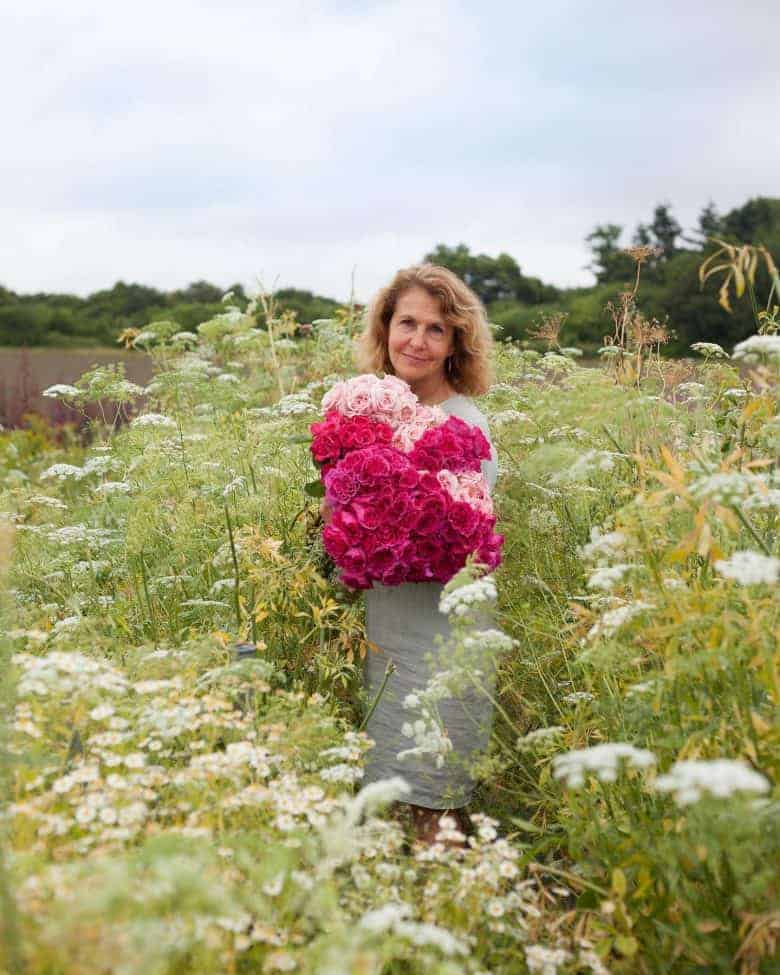
I created a small formal garden in my front garden this year, with roses, lavender and nepeta, but with mixed success. Suspect I under-estimated how much water they needed (they seem so much happier now after some really rainy weather) and I’m not sure if the rusty support I’m growing them against is good for the leaves….
My garden shed has been a triumph and source of everyday joy. I start many mornings there, mug of tea in hand, and sit in my Dad’s old Lloyd loom arm chair listening to the radio and taking in latest events in the flower beds. I’ve put an old wooden bench outside, beneath its windows and planted up an old zinc trough with flowers to create a focal point. I also filled an old half vintage whiskey barrel with water, added a flowering plant and it’s now a pretty little pond.
I have decided to create some space in my cutting garden for some well chosen rose bushes next year. But the choice is somewhat overwhelming. Where to start? I decided to ask Rosebie Morton, founder of The Real Flower Company is she could help. Rosebie is the queen of rose growing and I can’t think of anyone better to ask for advice. I wrote a blog post about an inspiring visit to The Real Flower Company Flower Farm, Hampshire last year if you’d like to know more.
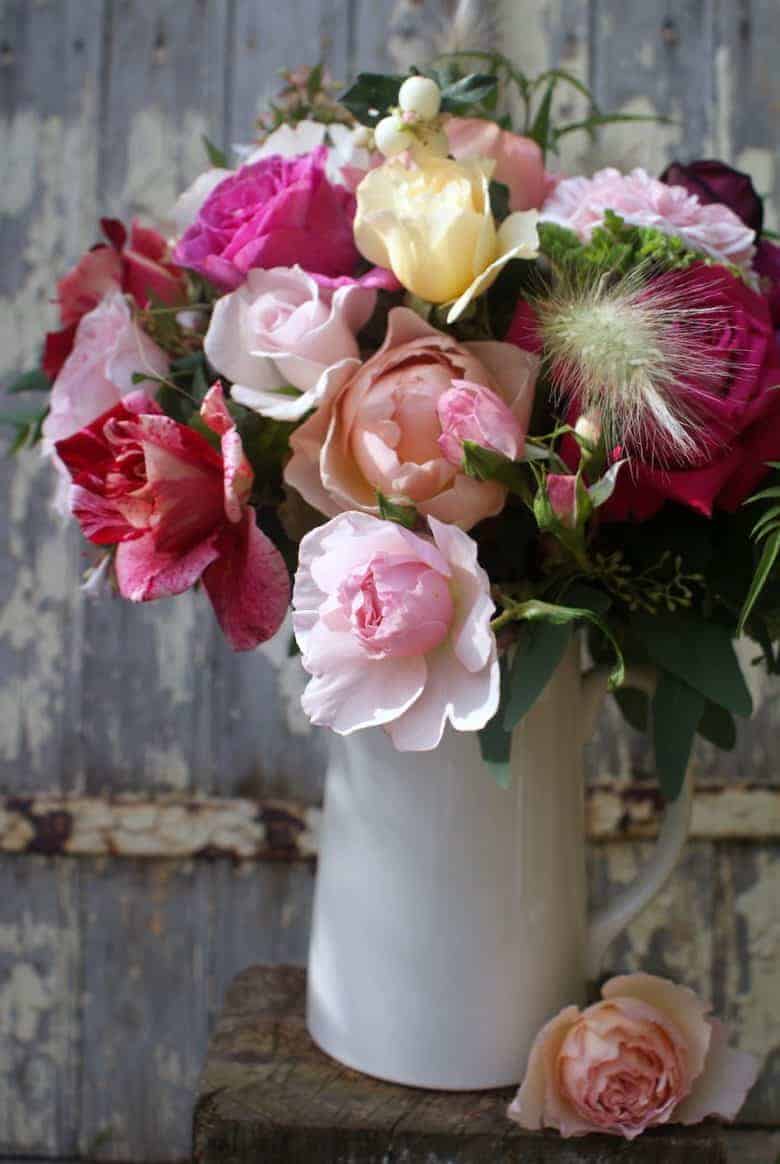
I’m going to make life easy for myself and simply order each of her suggestions for planting this Autumn.
Rosebie’s rose picks
‘I would definitely include Winchester Cathedral on my list of roses to grow for cutting. It’s a lovely clear white rose; sweetly scented, it produces lots of rosette-like blooms with pink tinged buds opening to pure white and it flowers all summer.
Arthur Bell – A deep yellow rose, fading with age and it is one of the earliest to flower. It is very fragrant with good glossy foliage and a very good cut flower. It has won lots of awards.
Gertrude Jekyll is a fabulous raspberry pink with fantastic scent. It is a very good cut rose and lasts for ages in a vase.
What about growing Roseraie de l’Hay? A really healthy shrub with very large fragrant bright-magenta blooms. Early in the season it has a wonderful apple green foliage which is great for cutting – providing you have a good pair of gloves! It also has fabulous hips and it is important in a cutting garden not just to be thinking about blooms but foliage, hips, seed heads etc as well.
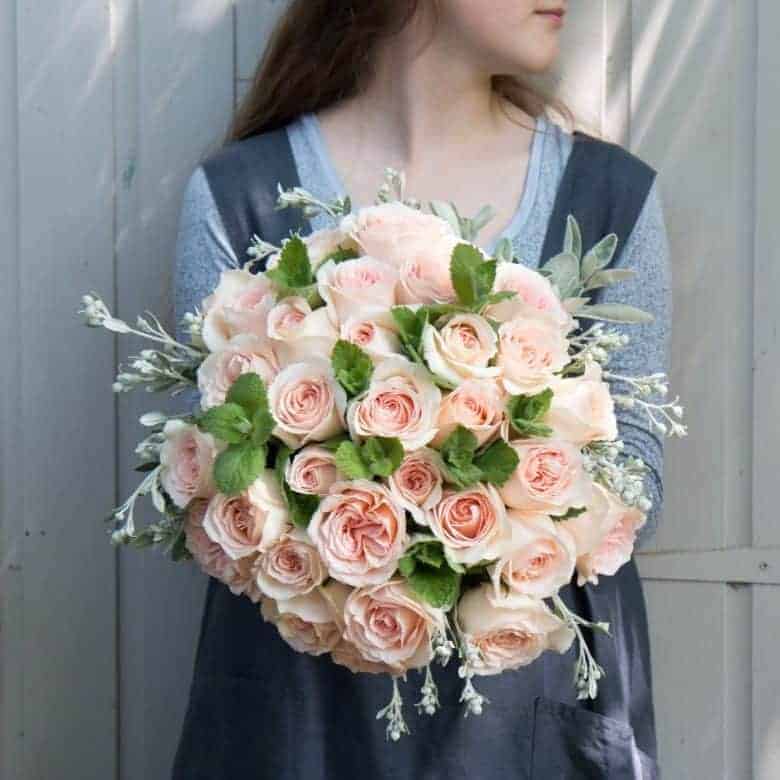
Chandos Beauty – I often refer to it as The Perfect Child as it is all round such a great rose. A beautiful hybrid tea with gorgeous peachy/ apricot very scented blooms, it is very healthy and needs no spraying and it rewards you with flowers all summer.
Creating good foundations
To get the best from your roses, it is just like building a house, in that you need good foundations. So make sure there is some good well-rotted manure in the soil, and you dig a decent hole and incorporate compost and a handful of a slow release feed such as Vitax Q4 and that you have soaked the roses well before you plant them.
People forget how needy roses are; they thrive on good water and feed and to get the best cut flowers they need to be pruned hard in the spring and then dead headed throughout the summer.’
Sarah Statham, Simply by Arrangement
Sarah grows flowers up in the Yorkshire hills and is passionate about bringing beautiful, seasonal flowers to the North of England and beyond. I just love her almost painterly style of floral design and how she uses colour and seasonal texture. Simply by Arrangement offers a range of highly inspirational flower workshops through the year. She has kindly shared one or two glimpses into her own flower garden as well as some expert ideas and favourite flowers to grow. You can find out more about Sarah, her inspirations, local loves and simple pleasures over on the blog: Meet Sarah Statham of Simply by Arrangement seasonal British flowers
My must grow flower varieties (for each season):
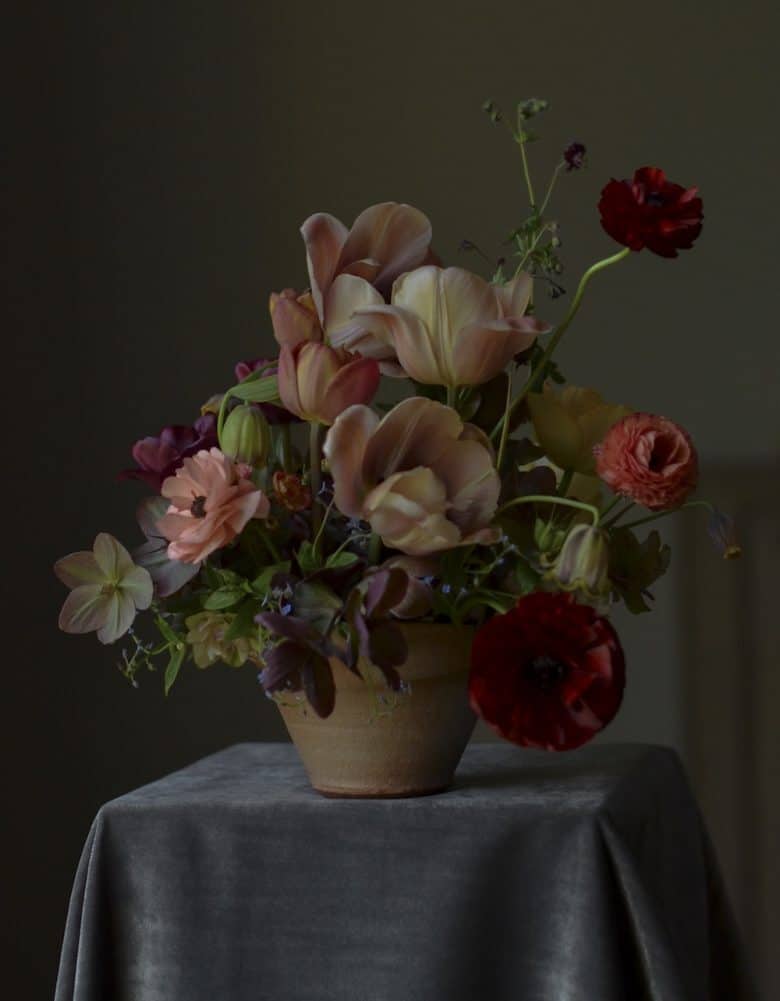
Winter: hellebores, snowdrops, sweet box for foliage. Also in winter I use a lot of dried flowers, grasses and branches.
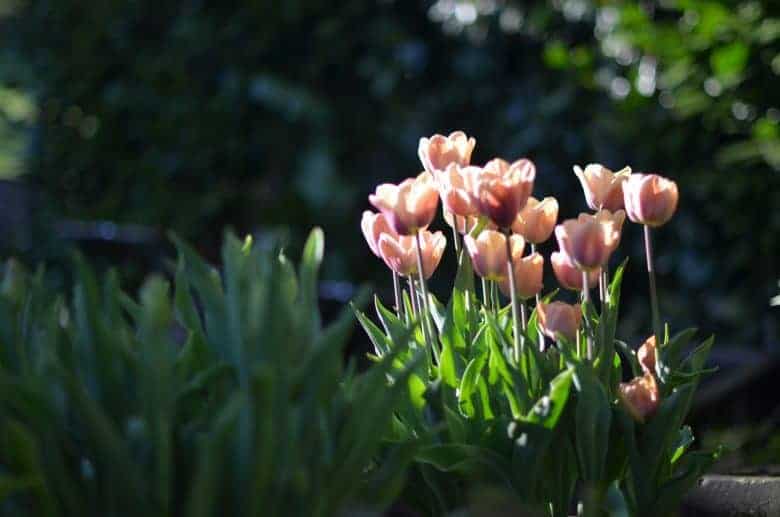
Spring: unusual narcissi (I love the tiny varieties such as Thalia), as many tulips as I can fit into as many deep crates and planters as I can find, fritillaries (this year we are planting masses of these for a special spring class), spirea and cherry blossom for foliage.
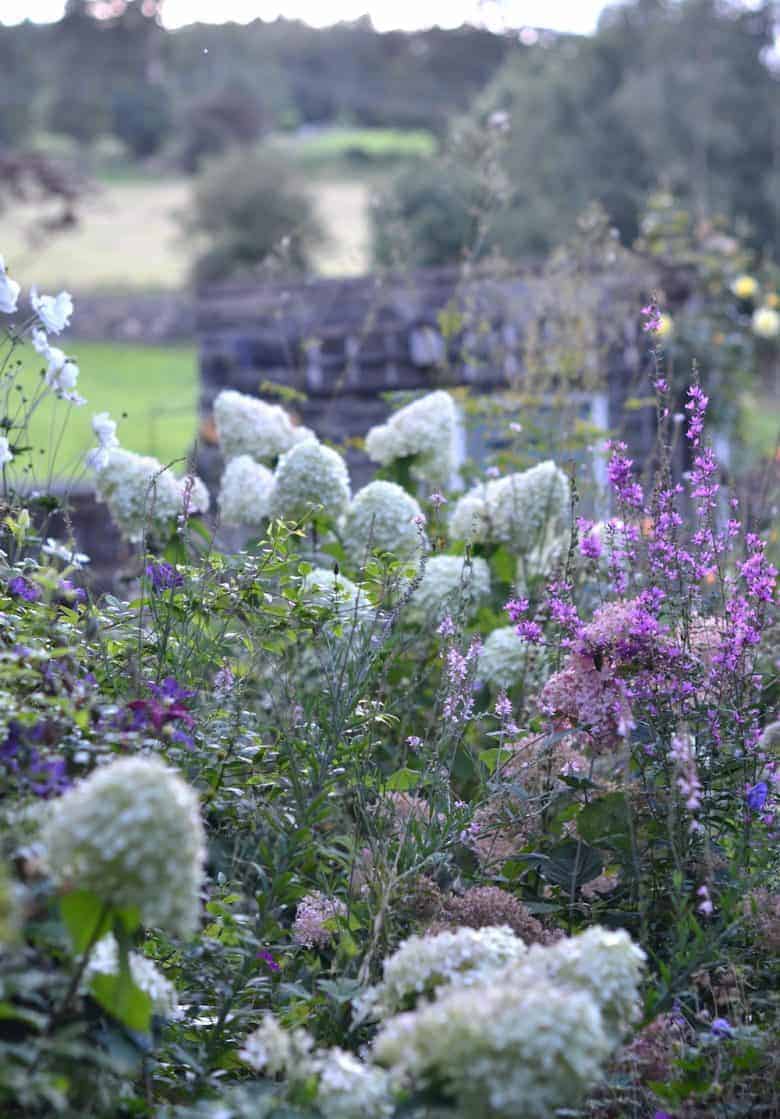
Summer: roses, foxgloves and as many annuals as I can manage. Some of my favourite annuals (from seed) are: Calendula; Coreopsis; Rudbeckia, Larkspur; Phlox Creme Brûlée; Scabious; Nigella; lots of herbs for foliage especially Oregano and scented Pelargonium.
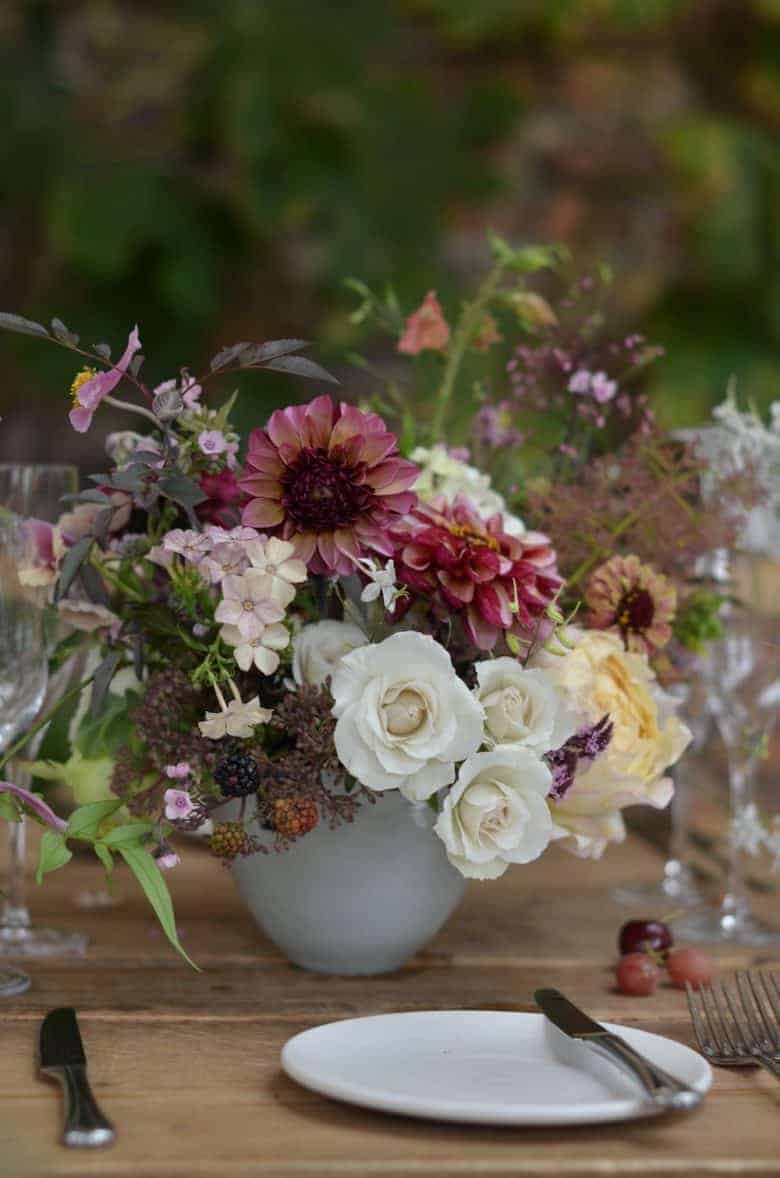
Autumn: dahlias (I love dahlias and usually grow over a hundred); rudbeckia and all of the autumn coloured foliage you can lay your hands on, including rose hips.
What to do now
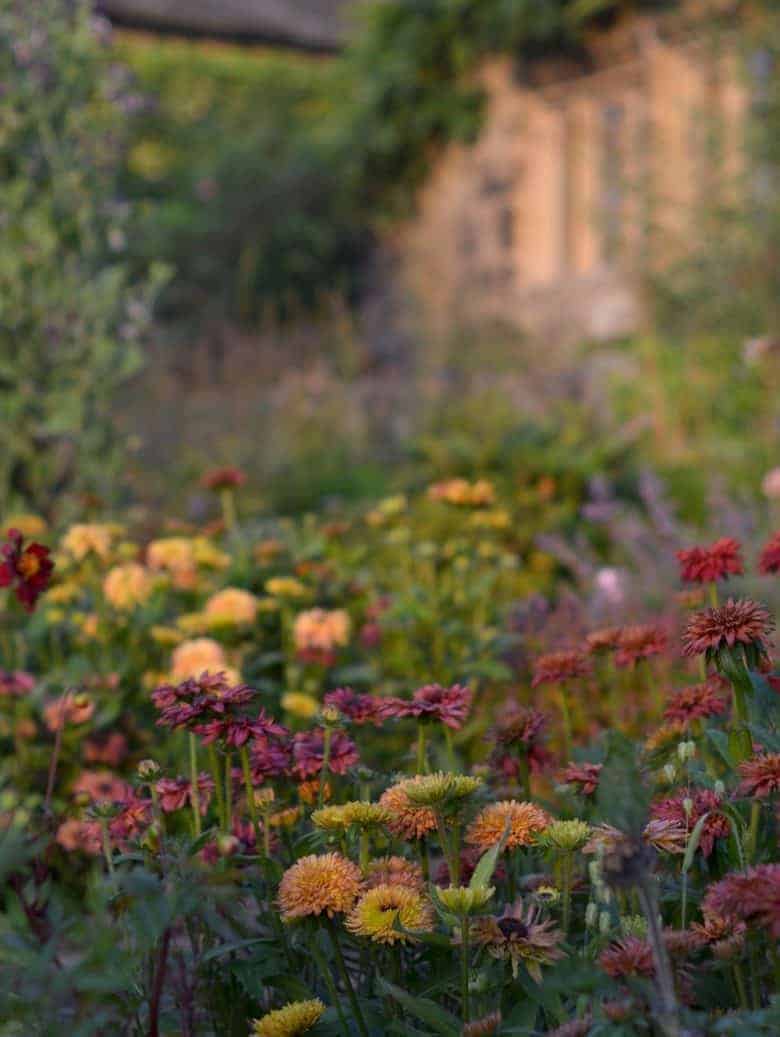
In Autumn (no later than October) we take cuttings from all of the Pelargoniums and Salvias. We also sow some hardy annual seeds. This year we have sown: Antirrhinum Chantilly Bronze (above, available here from Chiltern Seeds); Clarkia; Linaria; Calendula; Agrostemma; Larkspur; Poppy; Daucus (below, available from Chiltern Seeds); Scabious; Akebia Vine.
Also autumn is a busy time for planting bulbs. Narcissi first and Fritillaries and then (only after a very cold spell) all of the tulips.
Dahlias are dug up and stored.
Good places to source seeds/bulbs
Our seeds/bulbs and plants are sourced from lots of places. I’d suggest for plants using a good local nursery where the plants they grow are suitable for the weather conditions in your own area. For seeds try Chiltern. For bulbs Sarah Raven and for dahlias Rose Cottage Plants.
And for anyone starting their own cutting garden there are lots of books. Some of my favourites are The Cut Flower Patch By Louise Curley, In Bloom by Clare Nolan and The Flower Garden by Clare Foster and Sabina Ruber.
Georgia Miles, The Sussex Flower School
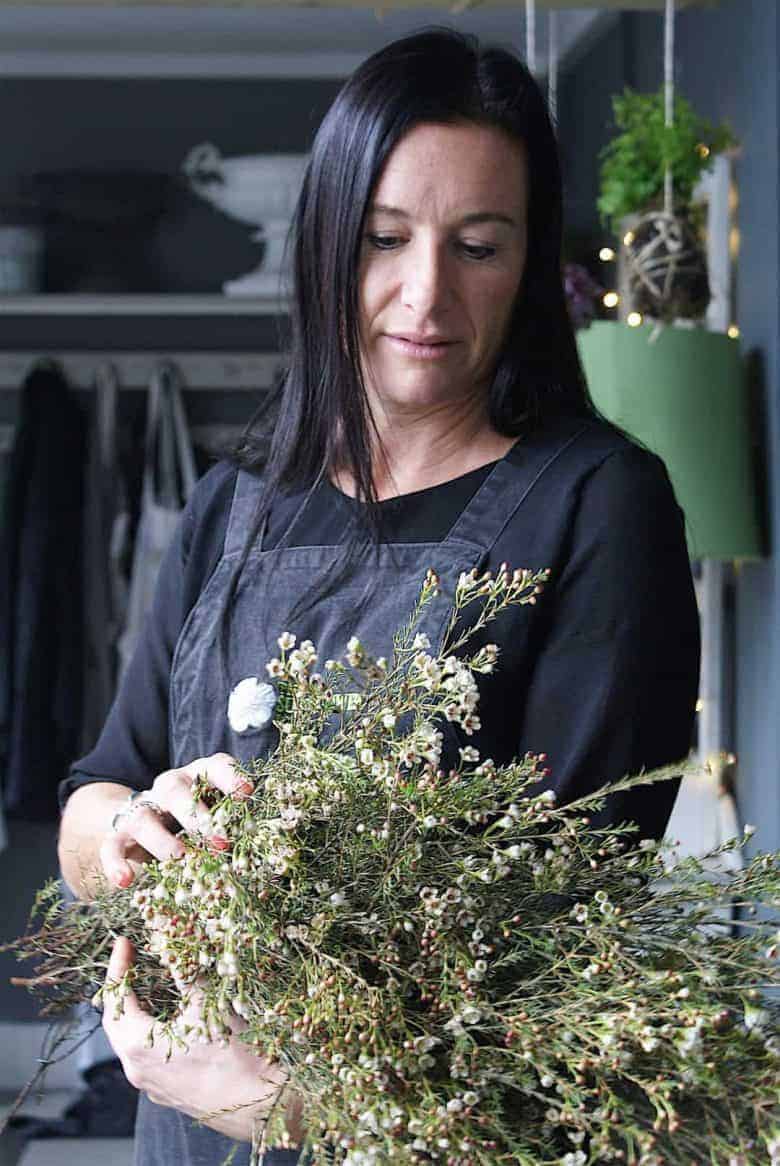
The Sussex Flower School has been listed with us since the very early days of FBWL and we have featured founder, Georgia, over on the blog a few times. Check out the blog post MEET Georgia Miles of The Sussex Flower School where she shares a few of her favourite places to get floral inspiration. Georgia really knows her stuff (Harry & Meghan’s wedding florist Philippa Craddock trained with her!) so I am very happy to share her thoughts and ideas with you.
‘Every year some things will work and some won’t – so don’t worry.
Fave flowers to grow
Try to see it as new opportunity to get a different plan. Fave flowers to grow are dahlias as they are so generous. Cut and come again flowers are best eg cosmos, nigella, sweet peas…
Grow things that don’t travel well or are expensive to buy eg cornflowers, alchemilla, scabiosa, delphinium, hellebores, euphorbias…
I use raised beds with a sleeper on its side. If you’re creating raised beds on grass, make sure the turf is dug up and turned over in the base and then fill with top soil. Mulch with well rotted manure every late autumn.
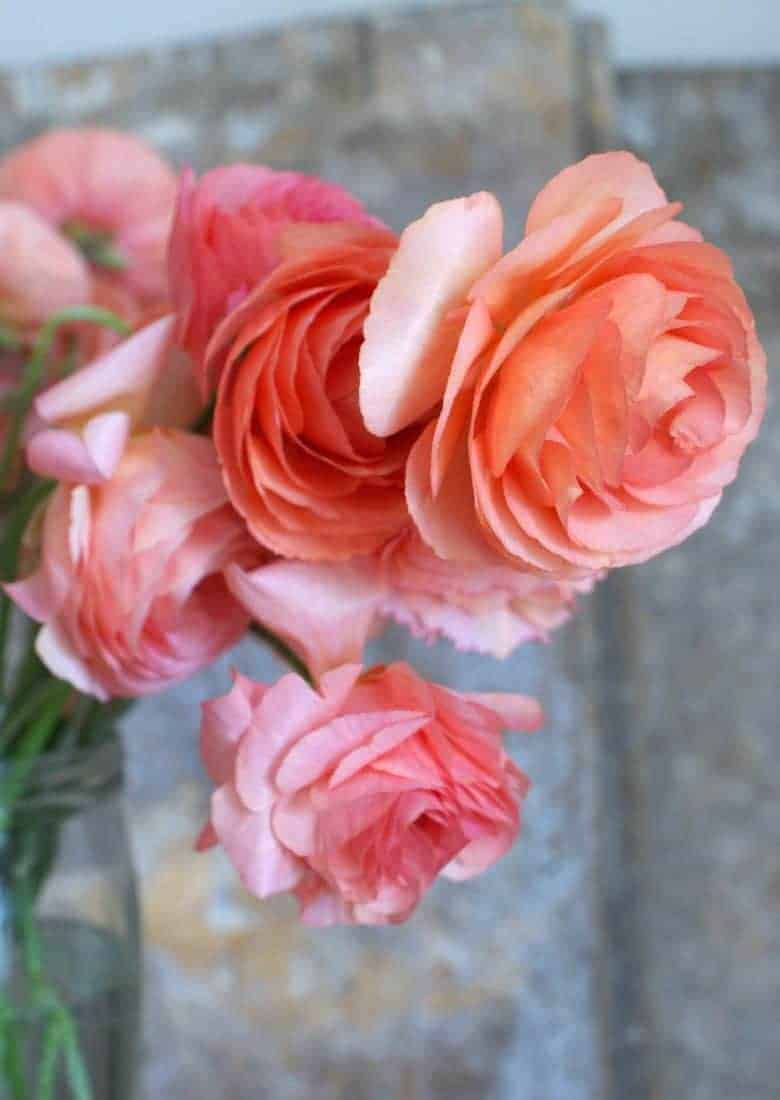
I would also suggest planting bulbs and corms etc in separate bed so you don’t damage them eg alliums, tulips, anemones, ranunculus (above)…
Also make sure you support plants really well.
Make your cutting garden beautiful AND productive. Lay out well with paths wide enough for barrow etc
Have a seat in a sunny spot to enjoy cup of tea looking out at the beautiful garden you’ve created. I have mine in a shady spot, flanked by some of the tallest plants
Grow herbs and scented plants too – their leaves can be beautiful and fragrant.
Create height with frames and structures
Beds should be no wider than 4ft for easy cutting.
When you’re planning, think of the different forms you’d like – eg tall rounds fluffy spray trailing etc that are useful when creating a floral design and choosing the type of plant to grow.’
Donna Bowen-Heath, Pheasant Botanica
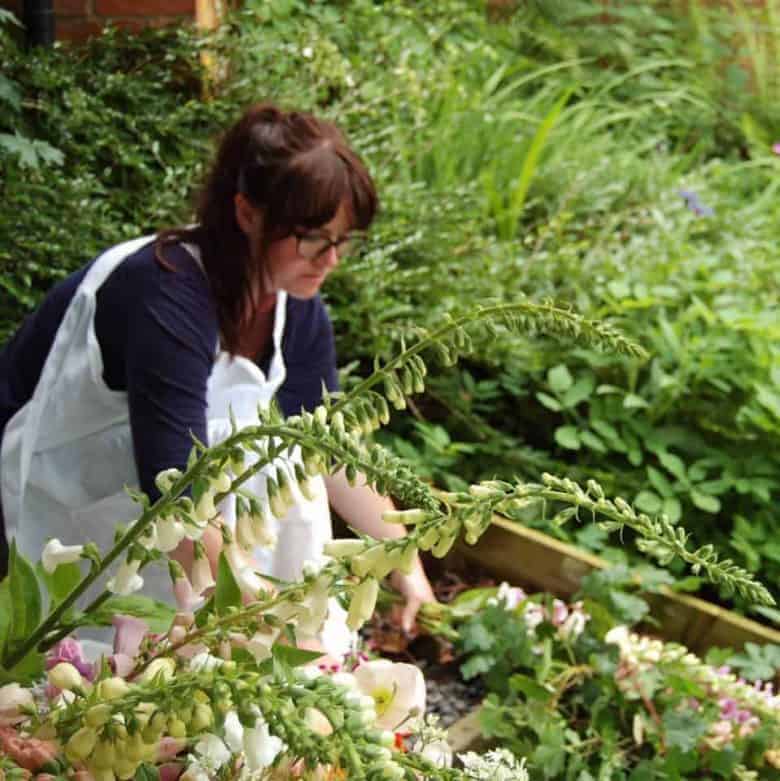
I love that Donna grows flowers on wild and windy welsh land that has been in her family for generations. Pheasant Botanica is her flower business using her homegrown blooms. Read more about the story behind her beautiful and sustainable flower growing in the blog post: Welsh Flowers by Pheasant Botanica.
Here are Donna’s seasonal tips for flower growing in the months and years ahead.
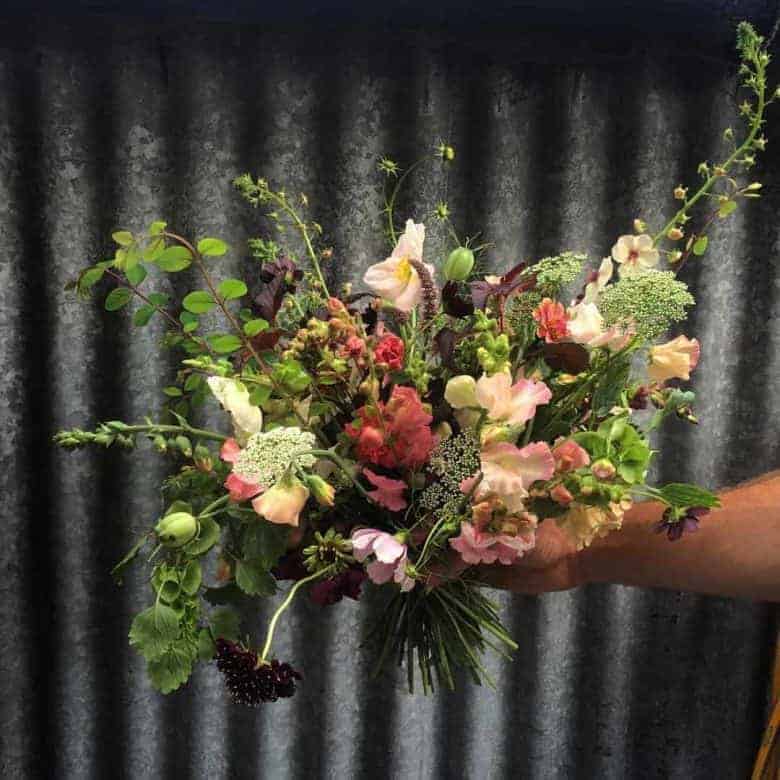
‘With Autumn upon us and the nights drawing in, now is the perfect time to plan ahead for next year’s cutting garden, whether you’re a beginner or a seasoned gardener. Though it can be a little disheartening that most of this year’s summer flowers have bloomed, by looking through seed catalogues – the perfect way to unwind after a busy day, there is plenty to look forward to.
Keep it simple
And if you are just starting out, the key to your cutting garden is to keep it simple. A few choice blooms that will reward you well throughout the spring and into summer which will allow you to enjoy the fruits of your labour without feeling overwhelmed if new to gardening.
Autumn is the ideal time to plant spring bulbs, plant out any biennials and even sow some hardy annuals for next summer. I adore the good old daffodil (or narcissus), and they really work hard for you. Plant them now until Late Autumn and in return they will be flowering year after year, with very little upkeep. With so many varieties to choose from, they really are the easy way to bring a ray of sunshine to a gloomy day.
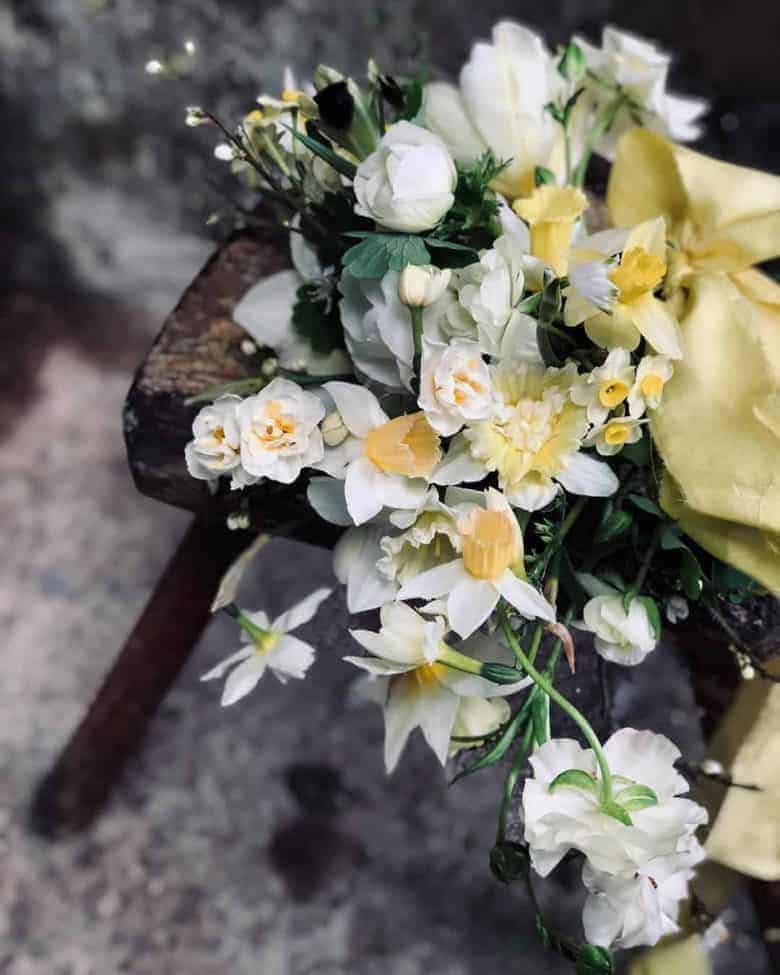
Following on from the Daffodils, I encourage you to have a go at Wallflowers somewhere in your garden area. They might seem a bit old fashioned to some, but with such an array of colours and being rather fragrant they are ideal to bridge the gap between the Spring bulbs and early summer annuals.
It’s a bit too late to sow seed for Wallflowers now, that’s a July job! However, at any good garden centre or online garden plant supplier, you will find wallflowers to buy bare root. Usually sold in bunches of bare root, they are quite mature plants and will settle quickly once planted, putting down roots ready to flower in late spring, surviving the harshest of winters.
Get ahead on next year
With the days getting shorter, you might think now is the wrong time to be sowing seeds but, now is the time to get ahead with sowing next years hardy annuals making strong plants. If you have a greenhouse, make sure it is clean, allowing as much light through the glass as possible, to help aid germination otherwise, a bright windowsill, out of draught will do just as well. My must grow annuals are those that I know work hard, which I cut and come again throughout the summer season.
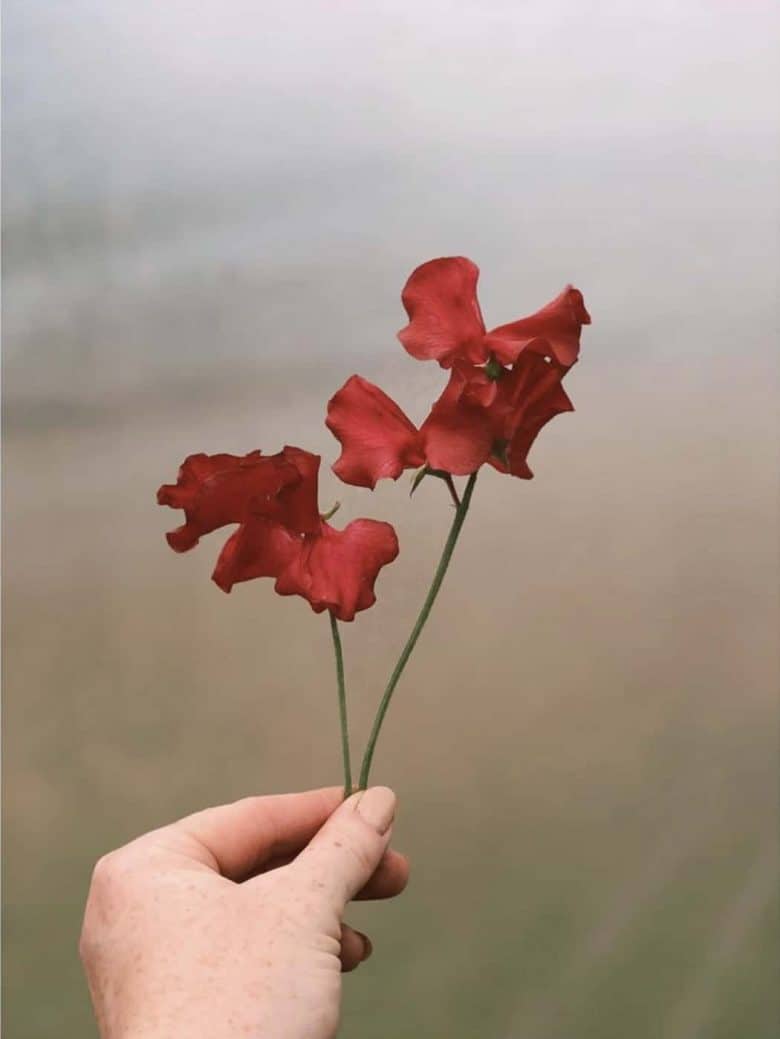
Sweet peas
Sweet peas being top of my list, those sown in the autumn make strong plants and produce good, robust flower stems for cutting. I don’t sow my sweet peas direct into pots but start them off on damp kitchen paper. Seeds are placed on the damp paper, on a windowsill, and over just a few days, they start to germinate. With a little tail starting to poke out of the seed, they are just about ready to be planted, and overwintered into pots.
I make paper pots, from old newspaper, or kitchen roll tubes are ideal. Sweet peas like a deep pot to establish their roots and dislike root disturbance – plant the sweet pea and pot when mature enough means a happy plant and less work for you too.’
Sarah Diligent, Floribunda Rose

Growing the flowers is only half the battle – as I learned, the hard way. My poppies were a disaster as cut flowers because no sooner had I cut and put them into water than they’d promptly wilt and flop. I wanted some helpful ideas for creating sustainable and lasting arrangements using the flowers I grow, so I asked Sarah Diligent of Floribunda Rose to share her top 3 tips.
Sarah’s a specialist in seasonal and sustainable British flowers and floristry so I knew she’d have some good ideas. You can read our recent blog post about Sarah’s latest book project: Foam Free Floristry The Sustainable Guide to Floral Design here.
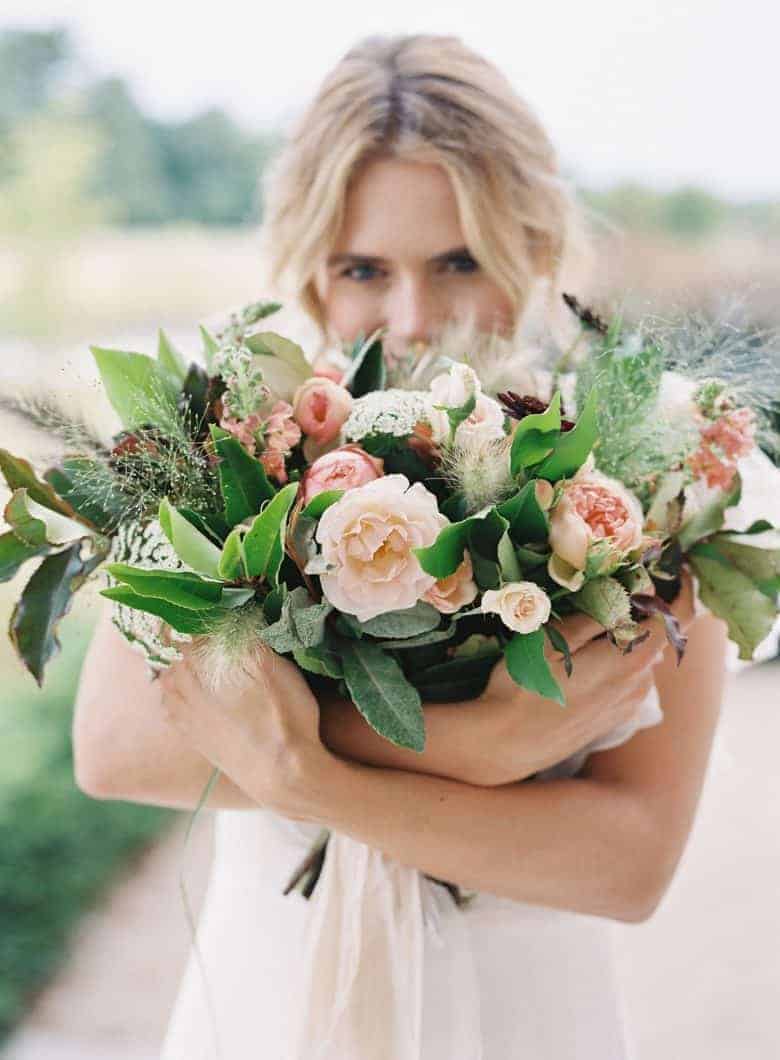
1) Picking healthy, quality flowers at the right stage really is the difference between having flowers last a day or a week…
Did you know that you can ensure hellebores work as a cut flower if they’re picked once the seed pod has formed? Flower farmers will know these things and can be a great source of information.
2) Conditioning correctly is essential.
Some flowers are very particular about how they like to be treated once cut. Poppies can be used in floral arrangements if heat treated – if you sear the cut end with a flame for a few moments immediately after cutting, they will last beautifully.
3) Any vessel can become a vase
Even non-waterproof dishes can become the base of a gorgeous design if you first create a ‘liner’ vessel to go inside – old jars, cut down buckets, or anything that will hold water. Once you’ve prepped your liner it can be used again and again.
Sarah’s favourite flowers to grow
Tulips, fritillaria and every type of blossom in the Spring
Garden Roses, Mock orange flowers and Japanese anemones in the Summer
Acidanthera, Dahlia and Asters in Autumn
Hellebores, amaryllis and Paperwhites in the Winter.
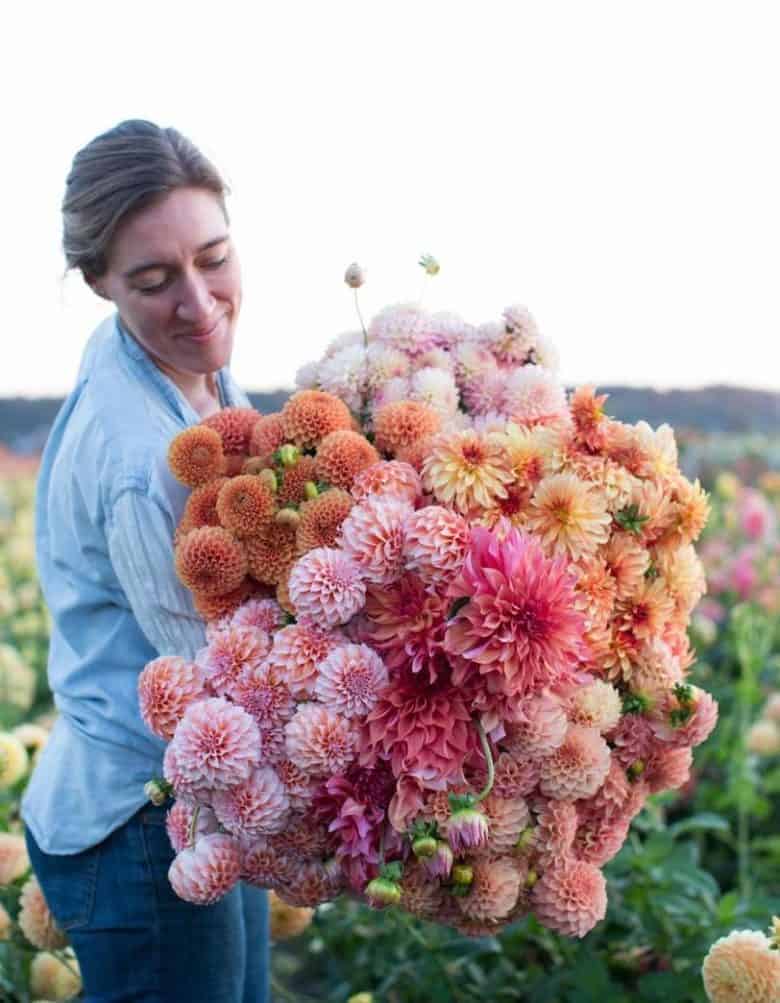
Future Cutting Garden Inspiration
My own little cutting garden project was, as I said at the beginning, sparked by a workshop with Tammy at Wild Bunch Flowers. But I was already ripe for the picking, I’d say. Due, in no small part, to discovering Floret Flower Farm on Instagram. The flowers Erin Benzakei grows on her Washington state farm are beyond beautiful and her photography a rich source of inspiration.
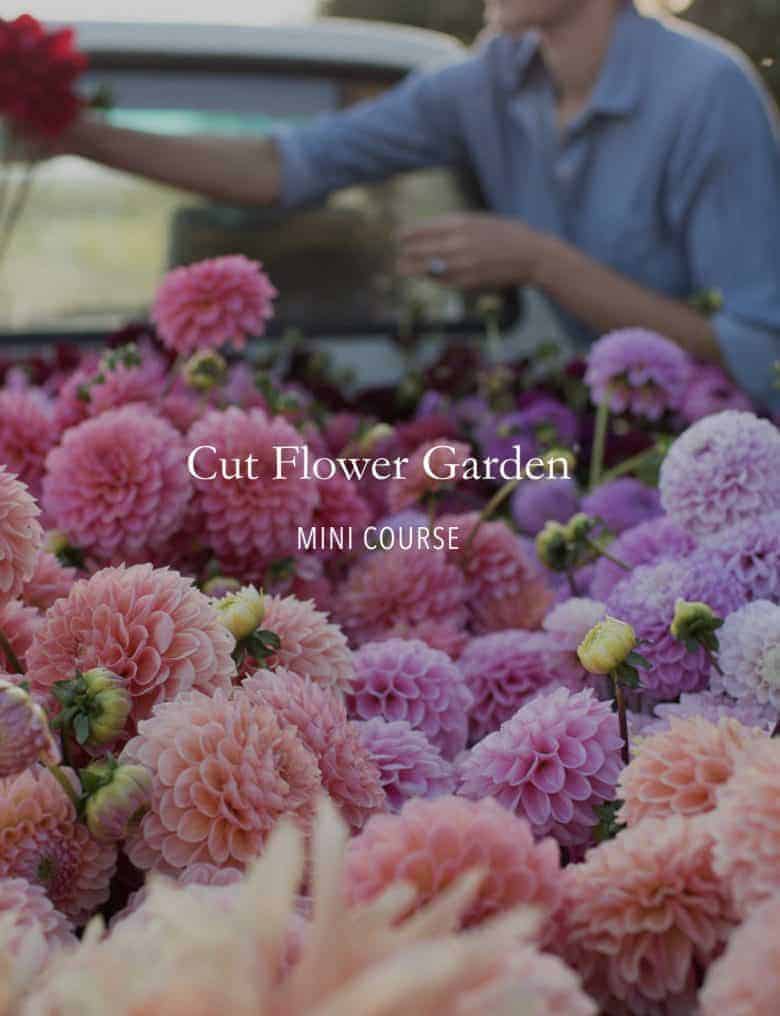
There is a fantastic free mini Cut Flower Garden video course by Erin, available by signing up here.
Inspiration from Floret
The Floret shop is full of the most wonderful seeds and bulbs (you can order selected seeds for shipping to the UK). You can also order Erin’s book The Cut Flower Garden – it’s the book she wished had been available when starting out as a flower grower.
Floret Farm’s Cut Flower Garden from Spencer MacDonald on Vimeo.
Erin kindly sent me some dahlia seeds along with a review copy of her book and, not quite sure what I had, I planted them and now the most beautiful tall plants with exquisite flowers in shades of coral.
Read my review of Erin’s book and the Q&A feature she did with me here: How to grow dahlias with Erin of Floret Farm
Another great source of flower inspiration is Sarah Raven. She sells a well-curated collection of seeds, bulbs and plants as well as garden accessories. There is also a really inspiring section on her website with lots of ideas: Growing Your Own Cut Flowers
My own particular picks for creating a cutting garden would be:
Dahlia Cafe au Lait Royal (the sort of flower you will fall in love with and a total show stopper.)
Tulip La Belle Epoque
Thunbergia African Sunset
Snapdragon Chantilly Bronze
Cosmos Purity
Antirrhinum majus Appleblossom
Delphinium Benary’s Pacific Summer Skies
Digitalis Sutton’s Apricot
INFORMATION
Find the following growers in the Sustainable British Flowers section of our Directory
Are you a maker, grower or creative course provider? Like to list with us and benefit from joining our supportive community? We’d love to hear from you. Check out the packages we offer on our Join Us page and get more details from our Information pack here
A PIN TO SAVE TO PINTEREST
It would be great if you could share the love if you’ve enjoyed reading this blog post. All you have to do is hover over the image below until you see the Pinterest button appear. Then share it to your boards. Thank you! X


Well detailed and with videos