
What Is Needle Felting?
In recent years, needle felting has become one of the most popular crafts among fibre artists and crafters/hobbyists. It’s a great way to transform wool fibres into solid shapes, flat sheets, or even wearable art. Whether you’re making small animals, facial expressions for dolls, or cute animals for decorations, this art form is as relaxing as it is creative.

For total beginners, needle felting might look baffling — how can soft, fluffy wool turn into firm sculptures? The answer lies in what happens to the fibres during the felting process. Using special barbed needles, you repeatedly stab unspun wool (like core wool or merino wool) to tangle the fibres together. The result is a firm shape or dimensional shape that can be further refined with colour, detail, and texture.
The Basics of Needle Felting
First thing to explain is exactly what needle felting is. Unlike wet felting, which uses hot water and soap to bind fibres, needle felting is a dry felting method. The fibres are matted together using needles alone, allowing for incredible detail in both 3D sculptures and flat pieces.
If you’re new to this art form, here’s what you’ll need to start your needle felting journey.
Essential Tools and Materials
1. Felting Needles
Felting needles come in different gauges and designs. Each needle affects how the wool fibres behave during the felting process.
- Coarse needle (lower gauge needle): Perfect for shaping core wool and forming basic shapes. Coarse felting needles are a key part of your felting kit.
- Regular needle: Great for everyday needle felting work and refining the base shape.
- Fine needles (higher gauge needle): Use a thinner needle for smoothing and detailing the entire surface of the wool.
- Star needle: Excellent for quickly covering larger areas or a thick layer of wool.
- Spiral needle: Helps achieve a smooth surface with minimal needle marks.
- Reverse needle / reverse felting needles: Ideal for creating fluffy textures by pulling fibres outward.
As a general rule, start with a coarse felting needle and move to thinner needles as your sculpture becomes firmer.
2. Needle Holders and Multi-Needle Tools
A multi-needle tool allows you to work faster on larger areas or flat sheets, while a single needle is best for precise detailing or tiny work.
For comfort and speed, many crafters use Clover’s needle felting tools or similar needle holders. These tools can hold multiple needles and make the process smoother and safer.
3. Felting Surface
Always protect your workspace and needles by using a foam pad, foam block, or needle felting mat. A flat mat is best for making flat sheets, while a foam block supports 3D sculptures and solid shapes.
Keep your project on the top of your felting pad — never on a hard table — to prevent needle breakage.
4. Wool Types
The type of wool you use determines your end result. How much wool you’ll need will obviously be dictated by the project you’re planning, but a little will go a long way in my experience.
- Core wool: Coarse and inexpensive, used for the base shape or cylindrical shape.
- Merino wool / merino tops: Soft, smooth, and ideal for finishing thin layers of wool.
- Colorful wool roving: Adds decoration, shading, and different colours of wool to your designs.
Working with high-quality wool ensures a more predictable felting process and a cleaner finish.
Step-by-Step Needle Felting Tutorial for Beginners
Follow these simple steps to make your first projects. You’ll start with basic shapes and learn the foundation for all kinds of 3D sculptures.
Step 1: Prepare Your Wool
Start with a piece of wool and pull it apart into thin layers of wool. Avoid cutting the fibres; pulling helps them felt naturally. Bear in mind that using less needle felting at first gives you more control later.
Step 2: Make a Core Shape
Roll the core wool into a loose ball or cylindrical shape. Place it on your foam mat and begin stabbing with a coarse needle.
Keep your needle straight to avoid breaking it, and pay close attention to your angles. As you poke, the loose fibres will compact into a firm shape. This is your base shape.
Step 3: Add a Surface Layer
Wrap a thin layer of wool (like merino wool) around your shape. Using a fine needle or spiral needle, felt evenly over the entire surface of the wool. Flip your work frequently so it doesn’t stick to the pad and maintains a smooth surface.
Step 4: Create Details
For details like facial expressions or small limbs, switch to a regular needle or reverse needle. If you want to add fur or texture, use reverse felting needles to tease fibres outward.
Work slowly — close attention to detail makes a huge difference in your end result.
Step 5: Attach Parts
To connect sections (like a head to a body), overlap the wool and needle repeatedly until the join is strong. For structure, use wire armatures, especially for small animals or 3D sculptures that need support.
Favourite patterns
Felted Sky on Etsy is a great source of felting patterns and kits as is Felt & Dandy and Bergin & Bath
This kit to make bunny pins is cute…

How about this cute Pigs in Blankets needle felted kit?

These baby penguins are cute too – get the kit here

This little Hares my Heart hare with a tiny red heart by Felt Fabulous on Etsy makes a lovely postable gift for someone you want to send some love to.

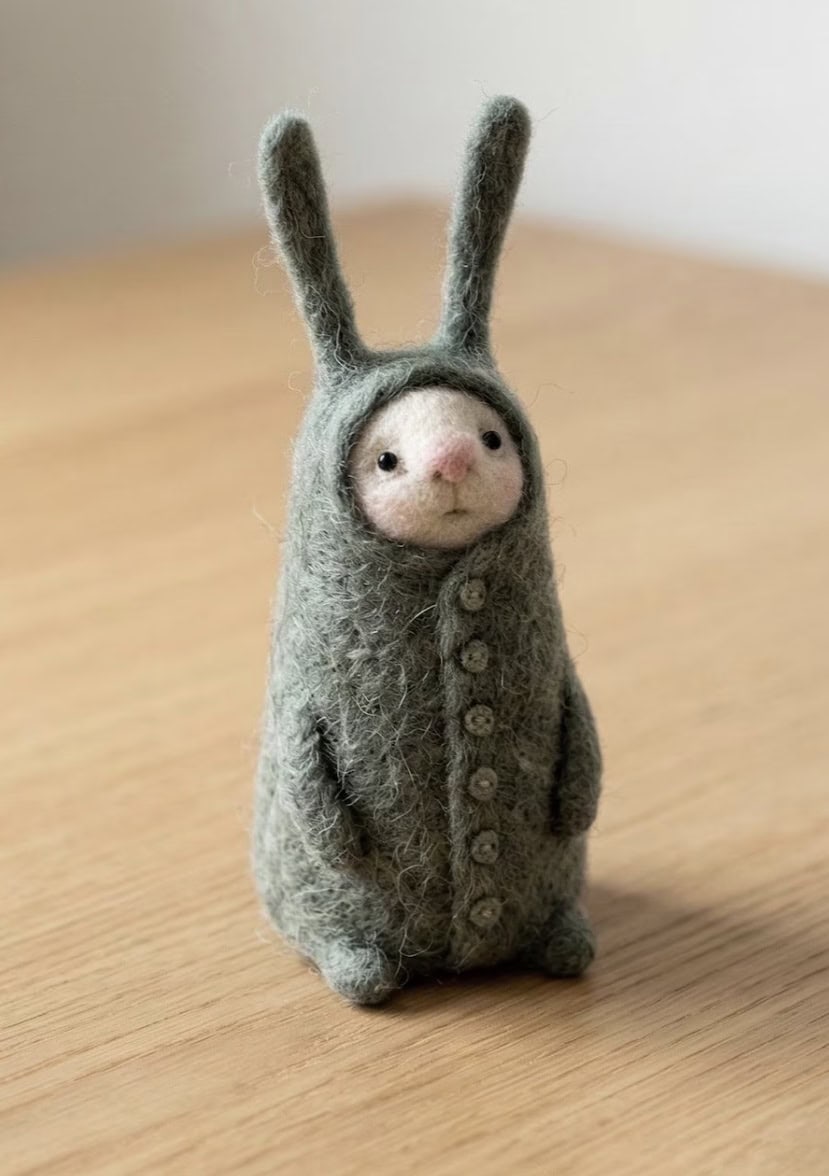
I am a bit in love with this forest sprite/goblin. There’s something so touching about it don’t you think? It’s by Nature Spirit Hut on Etsy.
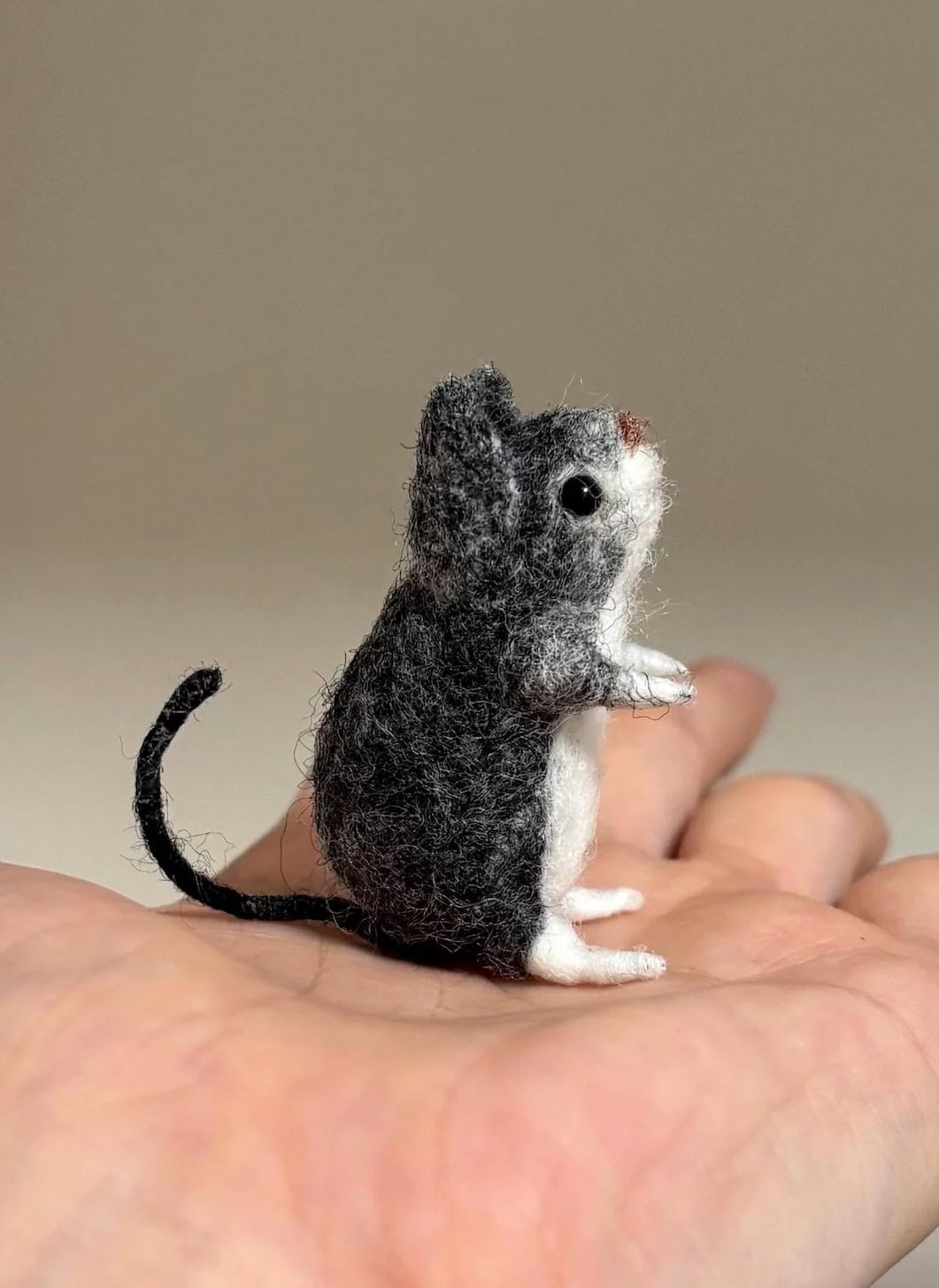
Or how about this tiny micro mouse? It’s by Tensaicraft on Etsy.
This micro teddy with adorable pig hat is also super cute – it’s also available to buy on Etsy here.

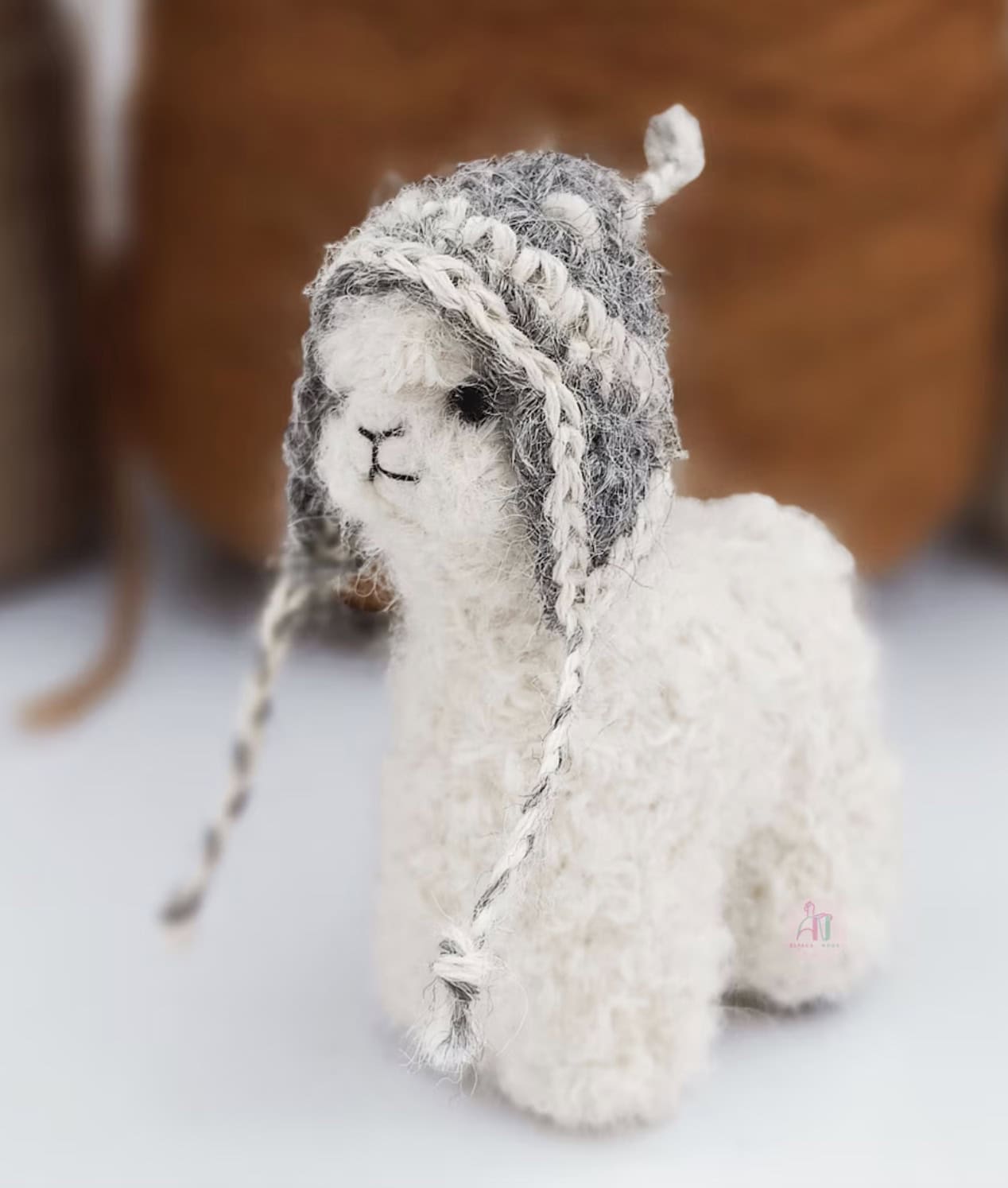
I thought I was finished and then I spotted this little one… You can buy this lovable little alpaca on Etsy here.
Favourite video tutorials
I’ve known Sandy of Lincolnshire Fenn Crafts since we bonded quite a few years ago now over our shared love of feisty robins…
She has written some fab posts for me – see the bottom of this post for links to written tutorials she’s shared with us. Here’s her video tutorial to make needle felt animals (including the hare pictured at the top of this page):
She has created a lot of inspiring content promoting this popular craft, as well as patterns, supplies and kits so do check out her website here
This is a great set of tutorials for absolute beginners:
Using Cookie Cutters for Simple Shapes
One of the easiest ways for total beginners to start is by using a cookie cutter as a mould.
- Place the cookie cutter on your needle felting mat.
- Fill it with unspun wool.
- Use your single needle or multi-needle tool to stab inside the mould.
- Once the flat piece becomes firm, remove the cutter and neaten the edges.
You can make hearts, stars, or other simple shapes to use as ornaments, elbow patches, or appliqué decorations.
Wet Felting vs. Dry Felting
While needle felting is a dry felting method, it’s useful to understand wet felting and nuno felting, too.
- Wet felting: Uses hot water, soap, and agitation to form flat sheets or fabric-like textures.
- Dry felting (needle felting): Uses different kinds of felting needles to tangle fibres without moisture.
Many artists combine the two for unique effects — for example, starting with wet felting to form a base and finishing details with needles in a process known as nuno felting.
Safety Tips and Good Habits
The most important thing when felting is safety. Felting needles are sharp, and accidents can happen quickly.
- Always use finger protectors or finger guards, especially when working on tiny work or smaller size details.
- Never use sewing needles — they’re not barbed and won’t felt fibres together.
- Keep your fingers away from the needle tip.
- For large or repetitive tasks, use a multi-needle tool to reduce strain.
- Flip your work regularly to maintain an even surface and prevent sticking to the pad.
Top Tips for Perfect Needle Felting Results
Even experienced fibre artists learn something new with every project. Keep these top tips in mind:
- Use the correct needle — Start coarse, finish fine.
- Work in thin layers — Multiple thin layers of wool give you better control than one thick layer.
- Flip your work — Ensures even felting across the entire surface of the wool.
- Don’t over-felt early — You’ll need flexibility for shaping.
- Experiment with colour — Try colourful wool roving or different colours of wool for depth.
- Invest in good tools — Quality needles, mats, and Clover’s needle felting tools make a difference.
- Take your time — The felting process is meditative; enjoy it!
Expanding Your Skills
After mastering the basics of needle felting, try creating 3D sculptures with wire armatures, or mix flat sheets with nuno felting techniques.
You can even make realistic small animals with fur effects using reverse felting needles, or design larger decorative pieces by layering thin pieces of merino wool over core wool. You can even create 2 D sculptures or felted artwork – such as sweeping landscapes – by ‘painting’ with fibre on the top side of the wool.
Some industrial setups use a big machine to felt on a massive scale, but nothing compares to the satisfaction of handmade felting. Watching your first projects turn from little balls of wool into adorable, recognisable shapes is real fun.
Final Thoughts on Starting Your Needle Felting Journey
Needle felting is more than a hobby — it’s a soothing, expressive craft that connects you to the tactile joy of working with natural materials. With a foam pad, a single needle, some core wool, and colorful wool roving, you can make anything from flat sheets to lifelike 3D sculptures.
The most important thing is to start simple, follow the above steps, and enjoy every moment of the creative process. With patience, close attention, and the right common tools, you’ll soon be crafting solid shapes, simple shapes, and cute animals that bring smiles to everyone who sees them – and that will definitely include you! And me, if you send me photos of what you make – I always love to hear from you.
So grab your needles, protect your fingers, and dive into the wonderful world of needle felting — one poke at a time…
You might also like
Needle felting books: my top 15 best for beginners
Best wool for felting: essential guide to all types
Lincolnshire Fenn Crafts needle felting kits & workshops
Halloween decorations felt pumpkins tutorial
How to make a needle felted rabbit
Needle Felt Robin easy tutorial


Good article!